Showing posts with label Fatalities. Show all posts

Thursday, May 8, 2014

State-By-State: Maryland


Maryland is in the 1st Corps area, and in close proximity to Washington, DC.  A good deal of CCC work was undertaken in this relatively small state, which may be due in part to the fact that Maryland is so close to America’s seat of government.  No doubt CCC projects in Maryland made for appealing public relations visits for senators and congressmen and they probably served as suitable examples of how the CCC funding was being put to good use.

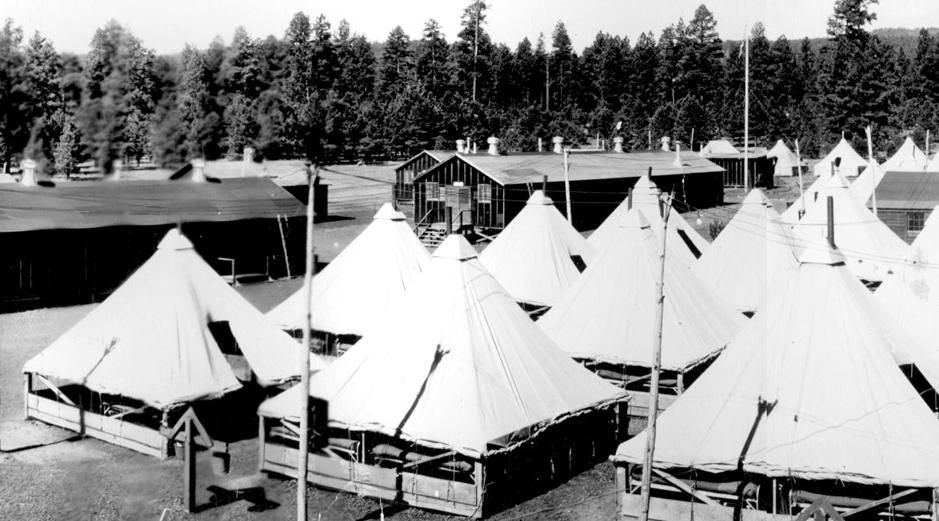
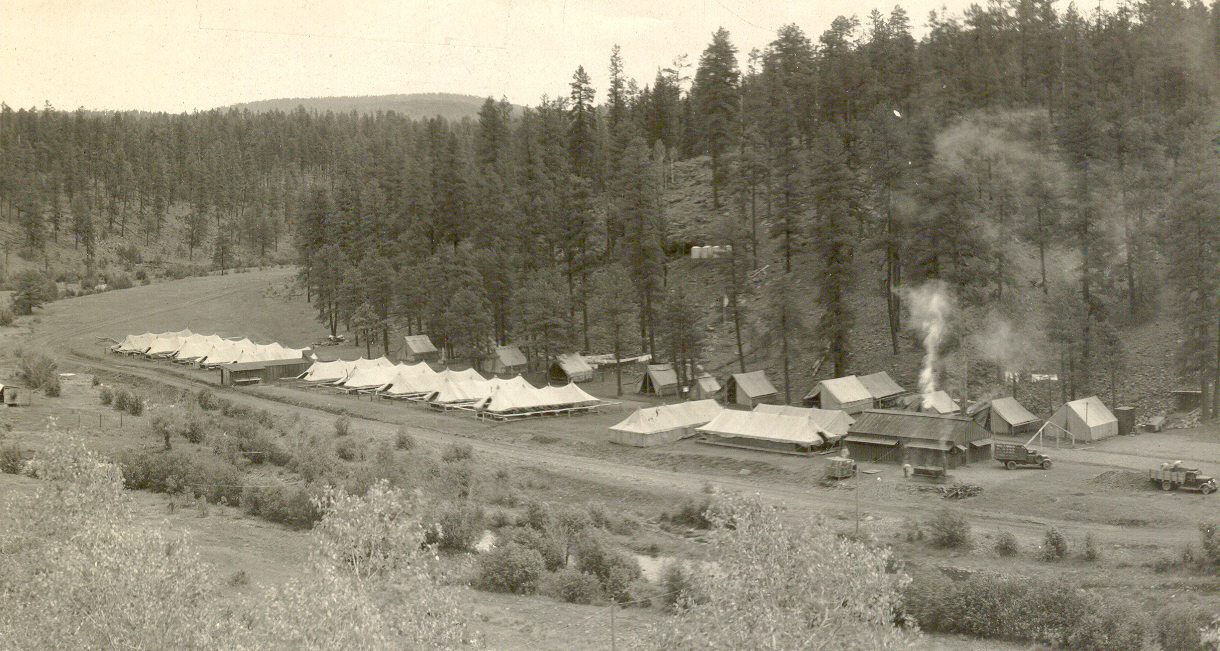
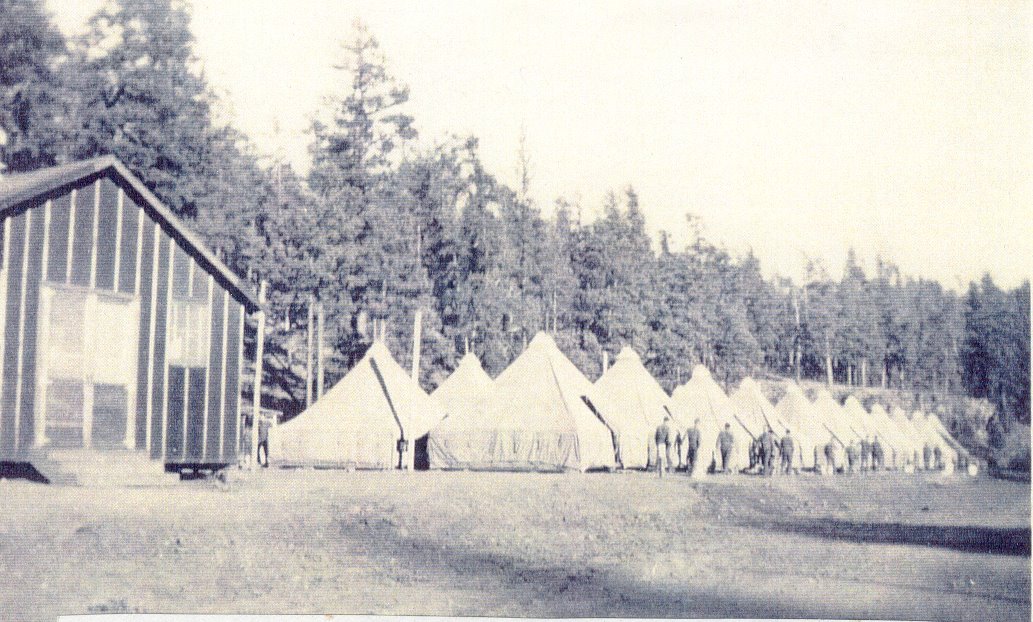
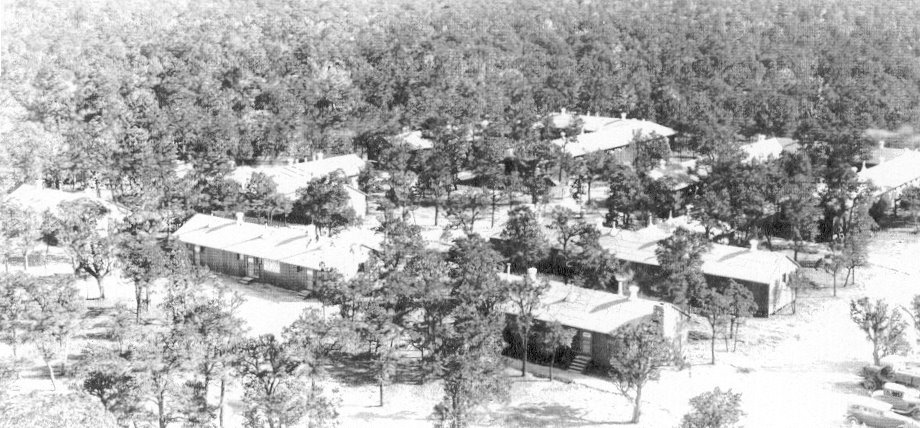
Beltsville, MD CCC camp, 1936, view looking toward camp HQ.

The Federal Security Agency Annual report of the Director of the Civilian Conservation Corps for Fiscal Year Ended June 1942 includes a detailed accounting of the work done by CCC enrollees at the Beltsville, Maryland Agricultural Research Center.  The report is significant enough to warrant a full quote here.  The account begins on page 55 of the report and reads as follows:

“Beltsville Agricultural Research Center
At the Beltsville Agricultural Research Center, Maryland, are carried on agricultural-research projects and numerous field experiments of the various bureaus and agencies of the Department of Agriculture.
This area includes specific areas assigned for experimental purposes to the Bureaus of Animal Industry, Plant Industry, Dairy Industry, Entomology and Plant Quarantine, Food and Drug Administration, Forest service, and Soil Conservation Service, all of the Department of Agriculture; Biological Survey of the Department of Interior since June 30, 1939, and the Bureau of Standards of the Department of Commerce.  The Center has been the scene of an intensive CCC program since October 1933.
While work projects on the Center are similar in type to the general CCC program, a rather heavy program for the development of the whole area and particularly roads, fences, water and sewer lines, shed construction, grading operations, and landscaping, was carried on by the CCC.
The first CCC camp at the Research Center came in October 26, 1933.  In 1934 another was assigned and in 1935 two more.  One company went out in October 1936, three continued until 1942, and the last one closing on July 21, 1942.  In October 1941, the Plant Industry Camp (NA-1) at the national Arboretum, was transferred to Beltsville supervision; it was closed however in December 1941.
From early 1941, one of the camps while still quartered at Beltsville carried on national defense work at Fort Meade, Maryland.  From February 1942 to its closing, another Research Center camp devoted 60% of its work to Fort Meade projects.

Log cabin recreation center at the Beltsville, MD animal husbandry center.
Accomplishments
For the fiscal year f1942, the major CCC contributions have been the installation of pipe lines, construction and maintenance of roads and parking areas, razing undesired structures, seeding and sodding, landscaping and soil conservation work.  This work is of considerable value, when viewed as part of the nine-year camp program at Beltsville.  Since 1933, the camps have constructed 39 bridges, 49 buildings of various types, over 65 miles of roads and trails, 29,000 square yards of parking areas, and 12,000 feet of walks, erected 130,000 rods of fence, installed 174,000 feet of water supply pipe lines and 309,000 feet of other pipe and tile lines, planted 78,000 trees and shrubs and seeded or sodded over 700 acres, done20,000 man-days of nursery work, 3000 acres of general cleanup, moved many thousands of cubic yards of earth incident to grading operations and performed many other operations of great importance to the Center.  Not only have these accomplishments been of value to the Research Center, its many participating units and the Department of Agriculture, but also much valuable job training, experience and related education has been provided many young men (mostly from rural areas) in these camps and this uplifting influence undoubtedly has and will pay substantial dividends in the form of better men and better workers so essential to the nation in this time of need.”

For a terrific history of the CCC in Maryland, click Here.

For more photos of the CCC at Beltsville, Maryland, click Here.

Maryland is also home to a CCC project that, over the years, has come to be a place of national importance, even if most Americans have never been there:  Camp David in the Catoctin Mountains.  A National Park Service brochure for Catoctin Mountain Park notes that in 1935 more than 10,000 acres of land in the Catoctin Mountains were acquired by the federal government for development as the Catoctin Recreational Demonstration Area (RDA) with the goal of finding new uses for marginal lands.  (Prior to the advent of the CCC, the Catoctin’s had been exploited – overused, really – for the production of charcoal, which involved clear cutting of forest, stripping of bark for tanning and general logging work.)  A list of National Park CCC camps published in The Civilian Conservation Corps and the National Park Service, 1933-1942 shows that the Catoctin RDA was home to Camp NP-3 (formerly SP-7) during enrollment periods 14, 15 and 16 as well as camp SP-3 for an unspecified period of time.  Part of the purpose behind the work in Catoctin was to develop recreational areas for the enjoyment of the people from nearby urban areas, including Washington, DC.  According to Ren and Helen Davis in Our Mark on this Land, the WPA laid out the park and constructed the camp facilities while the CCC, beginning in 1939, undertook reforestation work.  One interesting component of the CCC work at Catoctin Mountain Park noted in Our Mark on this Land is the work of CCC enrollees to collect old fence posts from within the boundary of the park for use in reconstructing fences in Gettysburg National Military Park (where the CCC also worked).

While the bulk of Catoctin Mountain Park is accessible to the public, Camp David is decidedly not open to the public and indeed there is even a no-fly zone imposed in the airspace over Camp David.  I know from personal experience that visitors to Catoctin Mountain Park may drive within close proximity of Camp David without even knowing it.  The following information about Camp David comes from the book, The President Is at Camp David, by W.Dale Nelson.  What is now Camp David, was originally known as Camp #3 or Camp Hi-Catoctin.  With an elevation of 1,800 feet, the location landed on a short list of sites deemed suitable as a presidential retreat for President Roosevelt in 1942.  At that time, the camp, which had been intended as a recreational facility for families, included three units of six four-cot cabins, a swimming pool, craft shop, and playing field along with an office, showers and recreation hall.  The Secret Service would eventually occupy a former CCC barracks, which FDR christened “221B Baker Street” after the fictional abode of Sherlock Holmes.  The Secret Service agents called the barracks, “The Long House.” 

Paige’s book on the CCC and the National Park Service lists all of the park service CCC camps in Maryland:

NP-1 Chesapeake & Ohio Canal, Montgomery County
NP-2 Chesapeake & Ohio Canal, Montgomery County
NP-3 Catoctin RDA, Frederick County
NP-4 Fort Washington, Prince Georges County
SP-1 Fort Frederick State Park, Washington County
SP-2 Patapsco State Park, Baltimore and Howard County
SP-3 Catoctin RDA, Frederick County
SP-4 Gambrill State Park, Frederick County
SP-5 Elk Neck State Park & Forest, Cecil County
SP-6 Maryland-Washington Metro/Rock Creek Park Extension, Montgomery and Prince George County
SP-7 Catoctin RDA, Frederick County

The work of the CCC at the Chesapeake & Ohio Canal National Historic Park is also worthy of note in any discussion of the CCC in Maryland.  Companies 325C and 333C, composed of African-American enrollees from the urban centers of Philadelphia, Baltimore and Washington, DC, worked to clear the historic canal alignment of debris and remove vegetation from the tow path.  They’d managed to complete work on 22 miles of canal before the U.S. entered World War and work was terminated.  For details of this project, including a photo, see Our Mark is on this Land.

  
Happy Days, the CCC’s national newspaper, reported on the deaths of at least five individuals affiliated with the CCC between 1933 and 1940:

Harry E. Jackson, an enrollee with Company 335, Brandywine, Maryland drowned and the tragedy was reported on page 16 of the June 27, 1936 issue of Happy Days.

Enrollee Albert Barnes from the Beltsville, Maryland camp was killed en route to a fire.  Barnes company number is not listed but his death was reported in the November 21, 1936 edition of Happy Days.

William Taylor, an enrollee in Company 2314 at Beltsville drowned, as reported on page one of the Happy Days issue of July 9, 1938.

Another Beltsville enrollee, Abe H. Kelly, also of Company 2314, was killed in an automobile accident while on leave, according to the October 7, 1939 issue of Happy Days.

Harold F. Kurtz was a U.S. Forest Service CCC inspector who was killed in an auto accident according to the October 14, 1939.  It is unclear whether Kurtz was somehow affiliated with the Rockville, Maryland CCC camp or if, perhaps, the accident occurred in Rockville.

We’ll close the Maryland entry for the State-By-State series with some enrollment and work statistics from the Annual Reports for 1937 and 1939. The Annual Reports are a terrific resource for things like overall enrollment by state and numbers of individual tasks completed, however there isn’t any information pertaining to specific work at individual locations in the various states.  Nevertheless, it’s interesting to compare work totals from year to year and to speculate as to why the numbers might have fluctuated from one report to another.

The Annual Report of the Director of Emergency Conservation Work for fiscal year ended June 30, 1937 lists totals for dozens of job types by state, including the following totals for work in Maryland, for example:
Vehicle Bridges:  13
Buildings (all types, incl. cabins, latrines & shelters):  43
Airplane Landing Fields:  3
Fighting Forest Fires:  6,727 man days
Fire Prevention:  3,883 man days

Enrollment figures from the 1936-1937 report give the following monthly enrollment numbers for Maryland:
July 1936:  3,240
August 1936:  3,008
September 1936:  2,464
October 1936:  3,115
November 1936:  2,942
December 1936:  2,766
January 1937:  2,999
February 1937:  2,864
March 1937:  2144
April 1937:  2,476
May 1937:  2,262
June 1937:  1,910

The average breakdown of Maryland CCC camps by type for the reporting period July 1936-June 1937 was as follows:
State Forest:  13
Mosquito Control:  2
Animal Industry:  3
Agricultural Engineering:  3
Soil Conservation:  3
State Parks:  2
Military Reservations:  3
Naval Reservations:  1

The Annual Report of the Director of the Civilian Conservation Corps for fiscal year ended June 30, 1939 (note the change in the title from “Emergency Conservation Work” to “Civilian Conservation Corps.”) gives these totals for the same types of jobs:

Vehicle Bridges:  8
Buildings (all types, incl. cabins, latrines & shelters): 28
Airplane Landing Fields:  0
Fighting Forest Fires:  3,346 man days
Fire Prevention:  40 man days

Enrollment figures from the report give the following monthly enrollment numbers for Maryland:
July 1938:  2,932
August 1938:  2,737
September 1938:  2,427
October 1938:  3,024
November 1938:  2,920
December 1938:  2,680
January 1939:  3,031
February 1939:  2,928
March 1939:  2,089
April 1939:  2,947
May 1939: 2,817
June 1939:  2,385

The breakdown of Maryland CCC camps by type for the reporting period July 1938-June 1939 was as follows:
National Parks/Monuments:  2
State Parks:  2
State Forest:  7
Animal Industry: 3
Agricultural Engineering:  3
Soil Conservation Service:  3

Sources
Davis, Ren & Helen, (2011), Our Mark on This Land: A Guide to the Legacy of the Civilian Conservation Corps in America’s Parks, The McDonald & Woodward Publishing Company.

Federal security Agency Annual Report of the Director of the Civilian Conservation Corps, Fiscal Year Ended June 1942 (no publisher noted).

Nelson, W. Dale, (1995).  The President is at Camp David, Syracuse University Press.

Paige, John C. (1985), The Civilian Conservation Corps and the National Park Service, 1933-1942.  National Park Service, U.S. Dept. of the Interior.

U.S. Government Printing Office, Annual Report of the Director of Emergency Conservation Work, Fiscal Year Ended June 30, 1937.

U.S. Government Printing Office, Annual Report of the Director of the Civilian Conservation Corps Fiscal Year Ended June 30, 1939.

The photos of the Beltsville, Maryland CCC work are United States Forest Service images from Stan Cohen's book The Tree Army: A Pictorial History of the Civilian Conservation Corps, 1933-1942.

Copyright, 2014, Michael I. Smith

Monday, April 28, 2014

State-By-State: Maine


Maine was situated in the First Corps Area, and it is said that Maine is the first point on the continental United States to receive direct sunlight every morning when the sun rises above the eastern horizon.  Consequently, we can reasonably argue that the CCC boys in Maine were the first CCC lads to see the sun every day. 

Perry Merrill reports on some basic CCC statistics for the state of Maine in his book Roosevelt’s Forest Army.  Merrill quotes figures from the 1937 Annual Report of the Director of the CCC, which I will expand upon later in this post, but as a starting point, Merrill reported that an average distribution of CCC camps in Maine for that period was:

Company 2140 at Southwest Harbor
National Forest:  1
State Forest:  1
Private Forests: 8
National Parks: 2
State Parks: 2
Military Reservation: 1
Merrill also refers to some overall figures for the CCC in Maine; specifically that the aggregate number of Maine men who gained employment in the CCC was 18,298 which included 16,686 junior and veteran enrollees and 1,612 non-enrolled personnel.  Overall, Merrill reports that the total number of individuals who worked in Maine, regardless of their state of origin was 20,434.
The 1937 Annual Report includes a section of fold out spreadsheets broken down by state and by project or job type.  The list shows that, among other things, CCC enrollees constructed 429 rods of guard rail in Maine during fiscal year 1937.  (A rod is a surveying measurement that is equivalent to 16.5 feet so multiplying the 429 rods by 16.5 tells you that the CCC boys constructed quite a bit of guardrail in Maine between 1936 and 1937 alone!)  Here are some other job type totals from the 1937 Annual Report that are not listed in Merrill:
Co 1130 masonry
Tree Insect Pest Control: 10,694 acres
Fire Prevention: 118 man days
Fire Suppression: 909 man days
Topographic Surveys: 819 acres
Signs, Markers and Monuments: 837
Emergency Work: 1,068 man days
The 1939 Annual Report includes the same sort of fold out spreadsheets and a comparison of similar job types finds these totals for fiscal year 1939 (year ended June 30, 1939:
Guard Rail: 6 rods
Tree Insect Pest Control:  3,849 acres
Fire Prevention:  0 man days
Fire Suppression:  4,723 man days
Topographic Surveys: Not Reported in the 1939 Report
Signs, Markers and Monuments: 55
Emergency Work: 27,783 man days
It is interesting to compare job totals from one report to another and to speculate, for example, why the total length of guard rail installed dropped so sharply between the 1937 and the 1939 annual reports.  It is also intriguing to see that fire prevention work declined from 118 man days in the 1937 report to zero days spent in fire prevention work in the 1938-1939 report.  Perhaps not surprisingly, the amount of time spent actually fighting fires jumped drastically from one report to the other (909 man days in the 1937 report up to 4,723 man days in the 1939 report).  Is it possible that the decline in fire prevention work led to an increased need for firefighting in the year or two that followed?  It’s an interesting thing to consider. 
Year to year changes in CCC work rates for things like fire suppression work might also be linked to major disasters that struck the east coast during this period and nowhere is the effect of those disasters more evident than in the comparison of CCC enrollee time spent on the job of “emergency work” in 1936-37 compared to 1938-1939.  The 1937 report lists 1,068 man days were devoted to emergency work, whereas, in the 1938-1939 time period CCC enrollees devoted 27,783 man days to emergency work.  The two disasters that likely account for such a drastic uptick in time devoted to so-called “emergency work” were flooding and hurricane.  Indeed, you could argue that one high water mark for the CCC in Maine was their assistance in response to devastating floods that struck in the winter of 1935-1936.  A personal recollection from enrollee Norman Wetherington, published in In the Public Interest, recounts the mobilization of enrollees from Company 1124 in response to a call from the town of Bridgton:
The afternoon of Friday the 13th, Lt. Fearer, commanding officer of the 1124th company received a call for help from the town of Bridgton.  He drove down to the edge of town to view the situation.  He took one look and went back to camp immediately.  Inside of a half hour he had the entire camp personnel loaded into trucks (seven forestry trucks and two Army trucks) headed for Bridgton.  The little army consisted of two officers, all forestry supervisors, office personnel, and the entire roster of CCC boys, except for three cooks that were left in camp to make sandwiches
Another natural disaster just two years later required the mobilization of hundreds of CCC enrollees in response to the September 1938 hurricane, which impacted dozens of towns in western Maine.  According to Schlenker, Wetherington and Wilkins, writing in In the Public Interest: The Civilian Conservation Corps in Maine, A Pictorial History, the hurricane stuck with such force “that whole stands of forest growth were wind-thrown, creating a high forest fire hazard.”  Such was the fear of a forest conflagration, the governor of Maine suspended hunting season in two counties and prohibiting smoking or burning of any kind in the woods.  In addition to valuable fire reduction work, it is estimated that some 75,000,000 board feet of lumber was salvaged from the hurricane area.
To be sure, firefighting and disaster response were not the only work efforts undertaken by the CCC in Maine.  Among the premier Maine state parks to benefit from the work of the CCC is Camden Hills State Park.  Park visitors encounter the work of the CCC almost immediately upon entering the park as they pass the stone entry gate and contact station.  Other CCC improvements in the park include hiking and ski trails and a group pavilion.  Ren and Helen Davis report that there are more than 40 CCC-built structures in active use there, including a dining hall, cabins, classrooms and bathhouses.

Members of the Company 1130 baseball team, Camden, Maine, 1940
As we have seen in previous installments in the State-By-State series, life and work in the CCC could be dangerous and enrollees in Maine were not immune to that danger.  Happy Days, the official newspaper of the CCC, reported on the deaths of at least two Maine enrollees.  Page one of the June 30, 1934 issue of Happy Days reported that Charles A. Merrey of Company 154 at Bar Harbor, Maine had been killed in an auto accident.  The August 5, 1939 edition of Happy Days reported that enrollee Clarence D Thurlow of Company 158 was killed when he fell from a cliff while on leave.

Co. 1130, NP-3-Me, Camden, Maine
 For access to a terrific CCC-related page operated by the Maine State Archives, click here.  On this page you’ll be able to access a list of Maine’s CCC camps and a Tribute page where personal stories of CCC service are posted and honored.

Company 1130, NP-3-ME, Camden, Maine, 1940
First Corps area map, October 1940, from the Company 1130 Pictorial Review
Enrollee John McLeod works in the woodshop, Co. 1130, Camden, Maine

Sources

Photos:  With the exception of the first map, all images are courtesy of Mr. John McLeod, who served as an enrollee in Company 1130, camp NP-3-Me, Camden, Maine in 1940.  John is a devoted advocate of the CCC legacy and an Iwo Jima Marine.  Thank you, John!

Davis, Ren & Helen, (2011), Our Mark on This Land: A Guide to the Legacy of the Civilian Conservation Corps in America’s Parks, The McDonald & Woodward Publishing Company.

Merrill, Perry H, Roosevelt’s Forest Army, 1981, Perry H. Merrill, Publisher.

U.S. Government Printing Office, Annual Report of the Director of Emergency Conservation Work, Fiscal Year Ended June 30, 1937.

U.S. Government Printing Office, Annual Report of the Director of the Civilian Conservation Corps Fiscal Year Ended June 30, 1939.

Schlenker, J.A., Wetherington, N.A. and Wilkins, A.H., (no date), In the Public Interest: The Civilian Conservation Corps in Maine, A Pictorial History, University of Maine, Augusta.

Copyright, 2014, Michael I. Smith

Wednesday, August 21, 2013

Remembering Some of the Dead at Blackwater Creek


August is a bastard.  Hot.  Dry.  Blazing.  Deadly.  If you’re lucky, August will break your will, steal what little hope you have left and leave you dejected, hoping and praying for September or, better yet, October.  If you’re unlucky, perhaps a bit too slow, a bit too tired, a bit too inexperienced or careless, or wearing the wrong kind of boots, that bastard August will kill you.  If you’re really unlucky, August will wipe out any vestige that you even existed.

August 21, 2013 marks the 76th anniversary of the blow up in Blackwater Creek, a fiery August conflagration that took the lives of 15 firefighters, most of them young Civilian Conservation Corps enrollees who battled wildfire on a rugged mountain slope hundreds of miles from their Texas homes.  I have posted more than one article related to the events that occurred in the Shoshone National Forest that blazing hot August afternoon and yet thoughts of that hot, smoky, fire-filled afternoon always come back to me when this bastard month rolls around and I begin to feel it’s too hot for my own good and then just as quickly, I remember that it isn’t likely ever going to be too hot where I am, compared to some panicky boys on a steep mountainside far from home in 1937.

Particularly heartbreaking is the fact that, while we know very little about the men who died fighting the Blackwater Fire, we know virtually nothing whatsoever of the CCC enrollees whose names filled the bulk of that tragic headcount in 1937.  Of the dead men who were variously in charge of the fire suppression work at Blackwater we know that one (Alfred G. Clayton) was born in Brooklyn, New York in 1892 and that he was considered to be a ranger of the “old school” and that he was an accomplished artist and writer.  We know that another (21-year-old Rex A. Hale) was originally from Afton, Wyoming, that he worked his way of from CCC enrollee to a full-time Forest Service position as Junior Assistant to Technician and that he left behind a wife and infant daughter.  We know that another of the leaders who perished on the Blackwater Fire (Paul E. Tyrrell) was a graduate of the University of California’s school of forestry, that he became a Junior Forester in February 1937 and that he died as a result of burns he suffered while trying to protect others during the fire.  Finally we know that one of those in charge of firefighting crews that day at Blackwater Creek (James T. Saban) had struggled with personal demons that had, in the past, forced him to leave work in forestry for a time and that he had only been back working in the woods professionally for about 3 weeks when the Blackwater blow up took his life.

Ranger Clayton and the men who were trapped in the gulch probably didn’t have a good deal of time in which to consider their impending fate.  A mortally injured enrollee, Roy Bevens, was found within 60 feet of Ranger Clayton, Foreman Saban, Junior Assistant to Technician Hale and enrollees Gerdes, Griffith, Mayabb and Rogers.  Bevens pointed out the location of the fatality site in the gulch and reportedly expressed his thanks to God for having survived, but he would later die from his burns.

As for the group of men with Ranger Post, the fire and the terrain provided time to weigh options, to take action, to pray and to panic, but there wasn’t evidently much time.  In the end, a rocky point was their last refuge as smoke enveloped them and flames surrounded them on all sides.  The group shifted from one side of the clearing to another to avoid the heat and flames.  Foremen and members of the technical services struggled to keep order in the chaos and in some cases, literally fought with the panicked men in order to keep them from bolting from the rocky clearing and its scant prospects for safety from the inferno all around.  Among the men trapped on the ridge with Ranger Post that blazing, smoking fearful August afternoon were CCC enrollees Earnest Seelke, Rubin Sherry, Clyde Allen and Herman Patzke.  Seelke, Sherry, Allen and Patzke made a break for it, along with Bureau of Public Roads employee Billy Lea.  Only one would survive the effort. 

The men were told to lie down, but according to Ranger Post’s account after the tragedy, many insisted on sitting up or even standing in order to say prayers.  Ranger Post noted later:

“Nearly all the boys grew panicky and instead of lying down as instructed, a good many of them stood up and ran to the edge of the park, turned and came back.  Some of the boys did not listen to any orders, instructions or cautioning and were insistent upon standing up and saying their prayers.”

Foreman Paul Tyrrell restrained panicked enrollees at the expense of his own safety; as he lay atop the panic stricken lads his body created a shield that protected the boys from the heat.  After the flames subsided, Foreman Paul Tyrrell would be helped from the burn area only to succumb to pneumonia a few days later.

For others trapped on what would later be named Post Point, death came a bit more quickly, but only just a bit and certainly in no less a traumatic fashion.  Sam Van Arsdale, a worker with the Bureau of Public Roads made a break for it at one point only to retreat back into the clearing but not before seeing others make a similar less successful break for safety.  Van Arsdale survived with burns but he recounted seeing other runners lie down in the flames, seemingly resigned to their fate.  Van Arsdale later recounted his ordeal:

“I tried to get away from that terrible heat…I remember there were other fellows running with me down the hill the first time.  But they didn’t turn around.  I guess they tried to run on through.  I saw some of them just lay down in there and let the fire burn over them.” (The Helena (Montana) Independent, August 24, 1937.)

In all likelihood, Sam Van Arsdale was witness to the death of some who chose to make a break for it:  Bureau of Public Roads employee Billy Lea or CCC enrollees Earnest Seelke, Rubin Sherry, Clyde Allen.  History records that only Herman Patzke survived his dash through the flames.
So here, for the first time that I am aware, are images of the four CCC enrollees who chose to make a run though the flames that blazing hot afternoon on a Wyoming mountainside 76 years ago.  History seems to have forgotten them, but not quite.


CCC enrollee Clyde Allen, killed at Blackwater Creek, Wyoming.

CCC enrollee Rubin Sherry, killed at Blackwater Creek, Wyoming


CCC enrollee Earnest Seelke, killed at Blackwater Creek, Wyoming.
CCC enrollee Patzke, Blackwater Creek Survivor.

Monday, August 5, 2013

State-By-State: Kentucky


1938 Camp Map for Kentucky
If you are looking for detailed information on the work of the CCC in Kentucky, you’re really in luck because there is at least one book devoted to CCC work in that state.  Kentucky’s Civilian Conservation Corps by Connie M. Huddleston will be a boon to anyone researching Kentucky’s CCC work; the photos and illustrations alone make it a real treasure.  I am especially drawn to Huddleston’s text and photos related to the work of the CCC at Cumberland Falls State Park.  A few years ago, the annual Civilian Conservation Corps reunion was held at Cumberland Falls State Park so in the case of Kentucky, I have some photos of my own to share.  To access an article about the reunion that I posted at the Forest Army blog back in 2007, click here.

Huddleston notes that the first CCC camps established in Kentucky were those at Cumberland Falls and Mammoth Cave and that by October 1935 a total of 35 camps had been opened in the Bluegrass State.  More to the point, Perry Merrill provides a snapshot of camp totals in his book Roosevelt’s Forest Army.  According to Merrill, there were 44 CCC camps in Kentucky in June 1937.  This total is likely taken from the annual reports published by the U.S. Government Printing Office in Washington, D.C.  The Annual Report of the Director of Emergency Conservation Work for fiscal year ended June 30 1937 gives the breakdown of camps by types in Kentucky exactly as reported by Merrill, specifically:
CCC-built bench and steps, Cumberland Falls, KY
National Forest Camp: 8
State Forest Camps: 1
Private Forest Camps: 8
Agricultural Engineering Camps: 2
Soil Conservation Camps: 14
National Parks Camps: 4
State Park Camps: 6
Military Reservation Camps: 1

The total monthly enrolled strength for enrollees entering the CCC from Kentucky in fiscal year 1937 was reported as follows:

July 1936:  11,272
August 1936:  10,750
September 1936:  8,907
Ft Knox CCC Conditioning Camp, 1934
(Click to enlarge.)
October 1936:  13,289
November 1936:  12,779
December 1936:  12,158
January 1937:  12,901
February 1937:  12,342
March 1937:  8,392
April 1937:  12,641
May 1937:  12,014
June 1927:  10,956

The Annual Report of the Director of the Civilian Conservation Corps for fiscal year ended June 30, 1939 reported that the total number of camps in Kentucky was down to 28, broken down as follows:

National Monument Camps:  3
State Park Camps: 3
National Forest Camps: 4
State Forest Camps: 1
Private Forest Camps: 5

Agricultural Engineering Camps: 2

Soil Conservation Service Camps: 10


It is worth noting that along with the lower number of camps in Kentucky in fiscal year 1939 compared to fiscal year 1937, the number of enrollees joining the CCC from Kentucky each month was also significantly lower in 1939; just 7,631 in July 1938, 7,271 in November 1938, 7,111 in January 1939 and 4,169 in March of 1939.  One might speculate as to the reason behind such a drop in enrollment numbers from 1937 to 1939 (the enrollment count for Kentucky in March 1939 was only about half of what it was compared to March 1937).  Perhaps the economy was improving, perhaps there were more agricultural jobs available for seasonal workers.  Perhaps Kentucky’s quota of enrollees had been reduced.  We do know that by 1939 enrollees from eastern states, including Kentucky, were being shipped out to the western United States where there was a greater need for their labor.

In his book The Civilian Conservation Corps, 1933-1942, John Salmond points to an even more compelling reason for a decline in enrollment numbers between 1937 and 1939.  After some four years of priming the nation’s economic pump, the Roosevelt administration was desperate to rein in spending and to balance its budget.  Consequently, in late 1937 CCC Director Robert Fechner was told that estimates for the 1938-1939 fiscal year had been reduced by $125 million.  Fechner pointed out that this would mean closing just over 400 CCC camps nationwide by July of 1938 but his protests fell on deaf ears.  The reductions were made as a budget balancing measure and this is likely one major reason for the reduction in the number of camps in Kentucky between fiscal year 1937 and fiscal year 1939.

Even with a reduction in the total number of camps, the CCC accomplished great things in Kentucky during fiscal year 1939.  Here are some examples from that year alone, taken from the Annual Report for 1939:

Vehicle Bridges:  14
Pipeline:  11,654 linear feet
Permanent Check Dams:  73
Temporary Check Dams:  3,305
Seed Collection, Conifers:  79 bushels
Seed Collection, Hardwoods:  10,536 bushels
Collection of Tree Seedlings:  9,270 seedlings
Firefighting, Forest Fires:  10,515 man days


Remember that these figures are for a single year (1938-1939).  Multiply this effort over the 9 year lifespan of the CCC and you truly have a noteworthy list of accomplishments in Kentucky alone.  Naturally, this effort was not accomplished without some sacrifice, and the cost was occasionally documented in the pages of Happy Days, the official newspaper of the CCC.  Likely the first incidence of a CCC fatality in Kentucky to be documented in Happy Days was the death of Jack Stafford, which was reported in the April 14, 1934 issue.  Jack was killed in a truck accident during a trip home and it would seem that enrollees in Kentucky were especially prone to accidents during their free time.  The March 3, 1940 issue of Happy Days reported that Daniel Miller, an enrollee with Company 512 at Chappell, Kentucky, was accidently shot and killed by his nephew while on leave.  The August 3, 1940 issue reported the death of enrollee John Elliot, also from Company 512 at Chappell.  Elliot was killed in an auto accident en route back to camp while on leave.   W.P. Harris, an enrollee with Company 1562 at Madisonville, Kentucky was killed in a work related truck accident (Happy Days, August 4, 1934) and Carl F. Snyder of Company 563, Corbin, Kentucky, was killed in a logging accident (Happy Days, May 25, 1935).

By and large, CCC camps were welcomed by residents of nearby communities.  It is estimated that the establishment of a CCC camp meant an additional $5,000 in expenditures in the local community so it makes sense that local towns would welcome the CCC simply from a monetary standpoint.  But CCC enrollees often endeared themselves to residents of nearby cities and towns as a result of their work and often as a result of their behavior.  In The CCC Chronicles, Alfred Cornebise notes that the local librarian in Henderson, Kentucky was moved to write an editorial about the local CCC camp, her words of praise appeared in the Company 1540 camp newspaper, the Cromwell Cardinal.  The librarian wrote that “rarely does a detachment of men, stationed near a town, make the good impression on the community that the CCC Camp has made on Henderson…  This most satisfactory condition is due, of course, not only to the boys but to the institution of the camp, to its discipline, its educational system, to its general conditions.”
CCC-built stone steps and retaining wall, Cumberland Falls, Kentucky


Sources

Cornebise, Alfred Emile, The CCC Chronicles: Camp Newspapers of the Civilian Conservation Corps, 1933-1942. Macfarland and Co., Jefferson, North Carolina, 2004.

Huddleston, Connie, M., Kentucky’s Civilian Conservation Corps.  The History Press, Charleston, South Carolina, 2009.

Merrill, Perry H, Roosevelt’s Forest Army, 1981, Perry H. Merrill, Publisher.

Salmond, John A., The Civilian Conservation Corps, 1933-1942:  A New Deal Case Study.  Duke University Press, Durham, North Carolina, 1967


U.S. Government Printing Office, Annual Report of the Director of Emergency Conservation Work, Fiscal Year Ended June 30, 1937.

U.S. Government Printing Office, Annual Report of the Director of the Civilian Conservation Corps Fiscal Year Ended June 30, 1939.

Copyright, 2013, Michael I. Smith
Monday, June 10, 2013

State-by-State: The CCC in Kansas


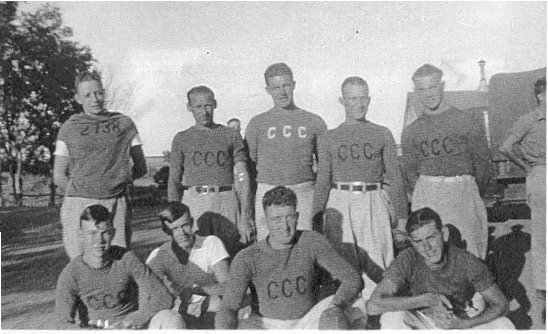
Look closely at the 1938 map of Kansas Civilian Conservation Corps camps (above) and you’ll see that all but one were “SCS” – Soil Conservation Service – camps.  Why do you suppose this was? 
The state of Kansas lies in the heart of what has come to be known as the “Dust Bowl” region of the United States.  Indeed if you study the map of the dust bowl region that appears in Timothy Egan’s outstanding book The Worst Hard Time, you’ll see that more of Kansas lies in the dust bowl region than any of her neighboring states.  Egan notes that on a single day, “Black Sunday,” April 14, 1935, more than 300,000 tons of topsoil was carried aloft by the arid wind; twice as much dirt as was excavated to carve the Panama Canal!
Most scholars agree now that much of the dust bowl disaster can be attributed to unwise farming practices that degraded the topsoil, making it vulnerable to drought and high winds.  Sadly, the CCC, like the Soil Conservation Service, came along too late to avoid the worst effects of the dust bowl, however it is safe to say that the creation of the CCC helped reverse the trend of rip and tear agriculture, perhaps avoiding further erosion and damage to the land.
Congress appropriated funds to create the Soil Conservation Service just a few days after “Black Sunday” in 1935 and in short order across the U.S. 150 CCC camps previously under the U.S. Forest Service were reassigned for work under the SCS.  But that doesn’t mean there weren’t some terrific recreational improvements made by the CCC in Kansas, as we’ll see.
Not surprisingly perhaps, Ren and Helen Davis list only one Kansas park in their book Our Mark On This Land.  According to the Davises, the only Kansas state park to benefit from CCC labor did so as a result of work by enrollees in an SCS camp:  Camp SCS-10-K.  Camp SCS-10-K was situated in the southeastern corner of Kansas, but you’ll notice that the 1938 CCC camp map shows an SP-2 up in the northwesterly part of Kansas; this is a discrepancy that I am currently unable to completely reconcile.  The facts are unclear even in Perry Merrill’s Roosevelt’s Forest Army.  In the state section devoted to CCC work in Kansas, Merrill notes that there was one state park camp in Kansas in June of 1937, however later in the section he writes that there were no state parks in Kansas until 1955.
The editor at The Civilian Conservation Corps in Kansas very kindly provided some insight into the nature of parks work by the CCC in Kansas.  While a map of Kansas CCC camps might appear to be heavily laden with SCS designated camps, there were aspects of the soil conservation projects that translated directly to parks and recreation work resulting in park type improvements – including a number of lakes - even if the underlying nature of the camp and company was soil conservation or erosion control.
At the end of the day we can take the numbers directly from the fiscal year 1937 Annual Report of the Director of Emergency Conservation Work which lists the breakdown of Kansas CCC camps thus:
State Forest Camps: 1
Soil Conservation Camps: 16
State Park Camps:  1
Military Reservation Camps: 2
The fiscal year 1939 Annual Report of the Director of the Civilian Conservation Corps (Notice the name change between the 1937 and 1939 reports; from “Emergency Conservation Work” to “Civilian Conservation Corps?”) reported the distribution of CCC camps in Kansas this way:
State Park Camps:  1
Soil Conservation Corps Camps:  13
If you compare the numbers from the 1939 report with the 1938 map that accompanies this article you’ll see that the total number of SCS camps differs by only one camp between the two.  Obviously, given the numbers in the Annual Reports and given what we know about the Dust Bowl and the desperate need for erosion control and soil conservation efforts in America’s heartland, it’s little wonder that so many of Kansas’s CCC camps were geared toward this sort of work but keep in mind that in doing this work, the CCC boys also created some lasting and valuable recreational spaces that Kansan’s enjoy even today.

Another interesting bit of information for Kansas that appeared in the 1939 Annual Report was the address of the main selection agency for CCC enrollment in Kansas at the time.  If you were a young lad in the state of Kansas in 1939 and you aspired to enroll in the CCC, you would have been well advised to contact the following:
State Department of social Welfare
Frank E. Milligan, Chairman
Mrs. Jean L. Benson, Supervisor CCC Selection
801 Harrison Street
Topeka, Kansas

And speaking of Kansas CCC enrollment, the 1939 Annual Report notes that 3,016 junior enrollees were selected in Kansas that year, along with 164 veterans.

Specific work totals in the 1939 Annual Report show that the CCC performed over 1,200,000 square yards of gully tree planting in Kansas that fiscal year.  Additionally, the CCC dug over 306,000 linear feet of diversion ditches, quarried over 36,000 tons of limestone and they excavated 31,573 cubic yards of dirt to build channels, canals and ditches.


Life in the 1930s was a precarious thing and we’re well aware that some CCC enrollees didn’t survive their time in the Triple C’s.  The February 9, 1925 issue of Happy Days reported on the death of enrollees Mervin Chapman and Kenneth Moore from Company 729, Ashland, Kansas.  Chapman and Moore were killed in a private plane crash.  Edward Cantrell from Company 1711 at West Mineral, Kansas, was killed as a result of falling into a mine shaft according to the August 8, 1936 issue of Happy Days.  A Local Experienced Man (LEM) by the name of Donald Stutes was killed when a grindstone fragment hit him in the face.  Stutes was assigned to Company 4702 at Burlington, Kansas, according to the March 27, 1937 issue of Happy Days.  It is important to consider these losses, even as we marvel at the wonderful work accomplished by the CCC in Kansas and all across our United States.

Be sure to visit The Civilian Conservation Corps in Kansas   for additional information on the work and legacy of the CCC in Kansas.  You’ll also see some terrific photos of Kansas CCC work there.

Sources

Davis, Ren & Helen, (2011), Our Mark on This Land: A Guide to the Legacy of the Civilian Conservation Corps in America’s Parks, The McDonald & Woodward Publishing Company.

Egan, Timothy, (2006), The Worst Hard Time, Houghton Mifflin Company, New York.

Merrill, Perry H, Roosevelt’s Forest Army, 1981, Perry H. Merrill, Publisher.

U.S. Government Printing Office, Annual Report of the Director of Emergency Conservation Work, Fiscal Year Ended June 30, 1937.

U.S. Government Printing Office, Annual Report of the Director of the Civilian Conservation Corps Fiscal Year Ended June 30, 1939.

Copyright, 2013, Michael I. Smith