Showing posts with label Indiana. Show all posts

Tuesday, February 18, 2014

The C.C.C. State-By-State: Indiana


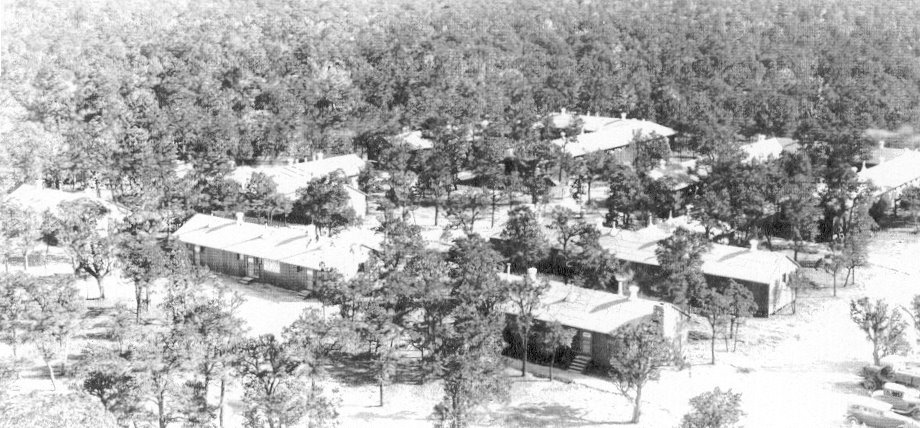
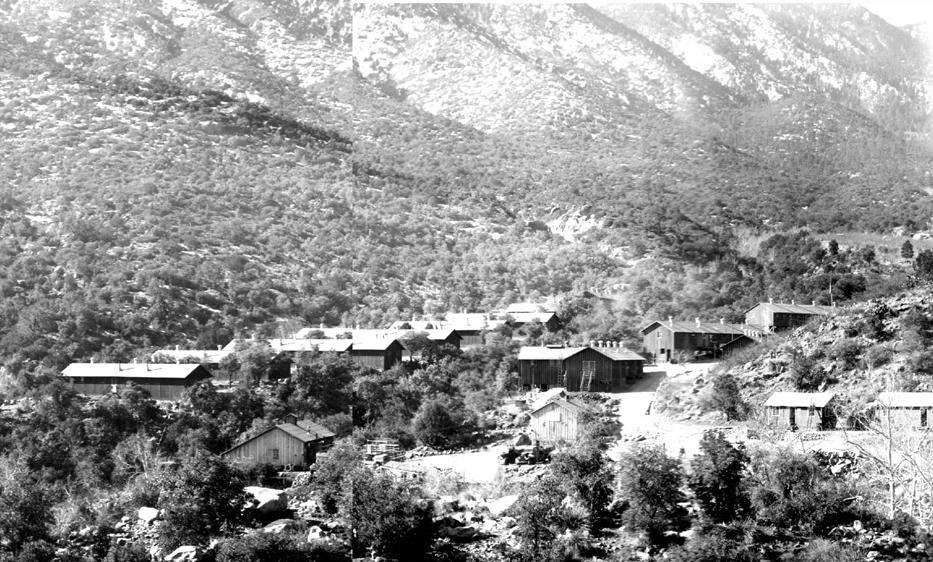
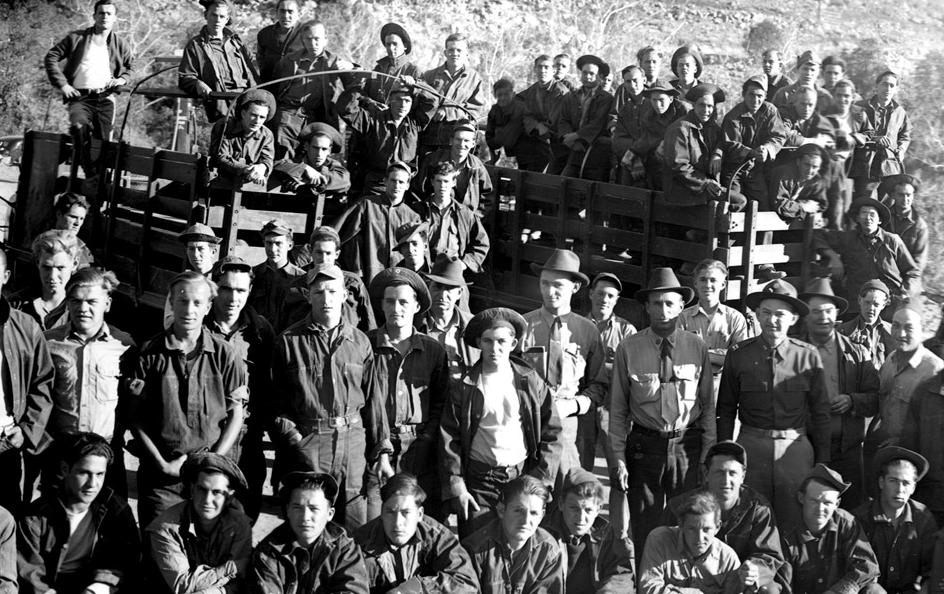
In Roosevelt’s Forest Army, Perry Merrill notes that an average of 30 CCC camps operated in Indiana during the lifetime of the program and that some 63,742 men from Indiana were given employment because of the CCC.

State forest work in Indiana was carried out in Clark, Morgan-Monroe, Brown, Harrison, Jackson, Jasper-Pulaski, Dubois, Warrick, Pike, Wells and Orange Counties.

The Annual Report of the Director of Emergency Conservation Work for fiscal year 1937 reported the monthly enrollment totals for Indiana as follows:

July 1936: 6,020
August 1936: 5,575
September 1936: 4,478
October 1936: 6,346
November 1936: 6,028
December 1936: 5,786
January 1937: 6,882
February 1937: 6,474
March 1937: 4,749
April 1937: 5,788
May 1937: 5,236
June 1937: 4,538
These are monthly totals for enrollments of men from Indiana, not totals for the number of CCC workers actually working in Indiana by month.

The same Annual Report (FY 1937) has a break down of camps by type in Indiana. During that period, Indiana had a total of 41 camps distributed amongst the various technical services as follows:

National Forest camps: 3
State Forest camps: 12
Agricultural Engineering camps: 8
Soil Conservation Camps: 10
State Park camps: 7
Military Reservation camps: 1

Indiana’s sole Military Reservation CCC camp was at Fort Benjamin Harrison, was designated camp Army-1 and, in 1936 was home to Company 3550. The Federal Security Agency Annual Report of the Director of the Civilian Conservation Corps, Fiscal year 1942 includes a summary of the type of work that the CCC performed on military reservations and while it does not refer specifically to Indiana, the details are informative. Among the tasks undertaken by CCC enrollees on military reservation land: airport construction, drill fields, tank traps and target construction, firebreaks around magazines, artillery and rifle ranges, observation posts auxiliary water supply systems storage buildings and sheds, camouflage work of all types and excavations for buildings.

Previous posts in the State-By-State series have elaborated on the unhappy reports of enrollee accidents and fatalities that appeared in the CCC newspaper Happy Days. For a change, let’s look at some upbeat news that was reported from various locations in Indiana in the Saturday, May 30, 1936 issue of Happy Days. For example, a short, 3-paragraph piece reported on the rare skill of one enrollee. The un-headlined piece reads:

"Co. 2580, Princeton, Ind., boasts of an enrollee who is literally “one in a million.” He is Johnny Jeffries, who won the national marble tournament in 1931. Census figures are used to confirm the assertion made by one of the camp officials.

In 1931 there were over 1,000,000 boys 12 years old and that Johnny was the one who at Ocean City, N.J., met and defeated the best boy marble players from 47 other states and Canada.

Johnny admitted, in a speech made before the company, that aside from planting a tree upside down he was a pretty good rookie."

The CCC Legacy camp list for Indiana shows that Princeton, Indiana was home to Camp SCS-1, known as Camp Princeton in 1935. Evidently, three years later, the camp was called Camp Seminole, but was still designated SCS-1, and was home to CCC Company 2550-C, an all-black CCC company.

Another Indiana-related article appears in the same section of the May 30, 1936 issue of Happy Days under the headline Oscar, a Squirrel.

"This is about Oscar, a pet squirrel of barrack 3, Co. 2583, English, Ind. He climbs all over the boys and likes to sleep in their jacket pockets. Another favorite place is their sleeves where he sleeps at the elbows.

Oscar usually gets angry when taken from his warm shelter and will vent his displeasure by little engaging growls. He will run to any hand or waving finger expecting to find a nut in them – he usually does. If you try to take away his nut, again the puny growls come forth. Of course, he frisks along the rafters as you would expect all good little squirrels to do."

The CCC Legacy camp list for Indiana shows that English, Indiana was home to Camp F-5-I and confirms that it was indeed home to Company 2583.

Another article reported the dedication of a new park entrance at Clifty Falls State park in Madison, Indiana. The governor of Indiana, Paul V. McNutt gave the keynote speech to dedicate Guthrie Entrance, named in honor of Senator Guthrie, the first chairman of the Indiana State Conservation Commission. The park entrance was built by enrollees from Company 1597 under the leadership of project superintendent John B. Clifford and commanded by Lt. Robert C. Hubbard. The ceremony was attended by the 84-year old Senator Guthrie who was accompanied by his three grandchildren who unveiled the bronze plaque.

To visit the Clifty Falls State Park website, click here.

(Note:  I managed to figure out how to resolve the formatting problem here, by switching to Blogger's "recommended" format.  Unfortunately, the new format includes so many new bells and whistles that I find I'll have to go back and re-learn everything in order to post decent content.  For example, I am now unable to post more than one image for some reason.  I don't have time to start completely over so I'm afraid the posts here will have to stop while I try to figure out how to make the posts work properly.  I feel really bad about this because I'd dedicated myself to getting all the State-By-State entries made through out 2011, but now it doesn't look like I'll be able to follow through on that goal.  For the record, I think that Google has just made their Blogger better for people who have nothing else to do in life but blog.  Unfortunately, for the rest of us, they've simply made it more difficult to share valuable content easily while at the same time attending to life's many other obligations.)



Monday, May 13, 2013

The C.C.C. State-by-State: Indiana

Indiana, which was situated in the 5th Corps area, saw an estimated $13,686,184 in allotments to dependents as a result of CCC work according to Merrill.  Furthermore, nearly 64,000 Indiana men were given employment in connection to the CCC, including junior enrollees, veterans and camp personnel.  The Indiana state map illustration here shows the location of CCC camps in the state in 1938.

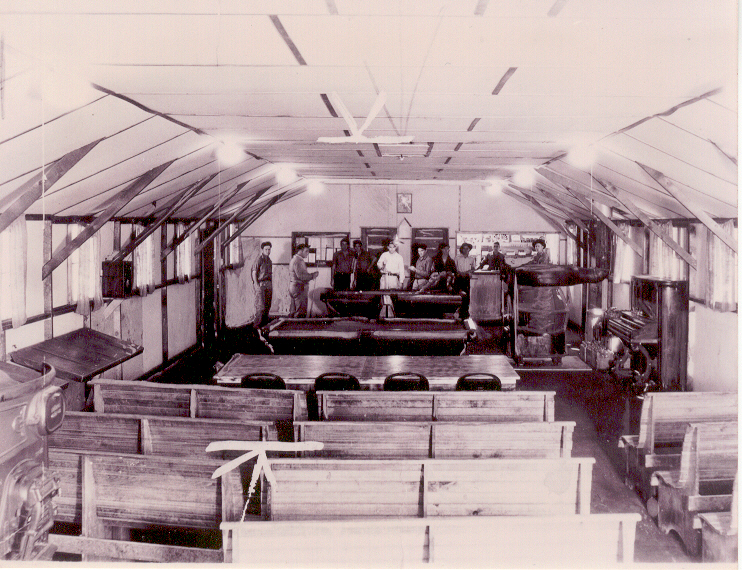
William “Otis” Hickman recalled working in a CCC camp at McCormick’s Creek State Park, southwest of Indianapolis.  The park and its camp were located near the town of Spencer, Indiana and Hickman wrote of walking into town for ice cream and a movie during the year he spent as a CCC enrollee there.  McCormick’s Creek State Park is listed in Ren and Helen Davis’s book Our Mark on This Land (2011).  Camp SP-4, Company 589 worked in the park, building a gate house, picnic shelters, roads and a stone bridge among other improvements.  The Davis’s report that the CCC recreation hall was later converted to a nature center by the WPA. 


The January-February 1934 issue of The Military Engineer magazine included an article by Captain Denzil Doggett entitled “Engineering in Indiana’s CCC Camps”.  At the time, Denzil reported there were 18 CCC camps in the state, engaged in a range of activities including gully-control work on private property, forest improvement and construction projects in state forests and game preserves as well as similar work in state parks.  With respect to the gully-control work done by the CCC in Indiana, Denzil noted that each such camp had two or more foremen, whose duties included designing dams and spillways for erosion control, establishing boundary control to insure that work did not stray into unauthorized lands, and calculating drainage areas.  At the Nancy Hanks Lincoln Memorial, Denzil described the construction of an earthen dam and concrete spillway that would impound water in a 28 acre area, with the impounded water being used “to irrigate an extensive landscaped area which forms a part of the court of the memorial building which is to be constructed in future years.”

In the fiscal year ending on June 30, 1937, 5,521 enrollees worked in Indiana, while the 1939 Annual Report of the Director of the CCC reported that a total of 7,411 enrollees worked in Indiana during the fiscal year.  The breakdown of camp types in 1937 and 1939 was as follows, according to these Annual Reports:

1937:
National Forest Camps, 3
State Forest Camps, 12
Agricultural Engineering Camps, 8

Soil Conservation Camps, 10

State Park Camps, 7

Military Reservation Camps, 1

1939:

State Park Camps, 7

National Forest Camps, 2

State Forest Camps, 5
Agricultural Engineering Camps, 6
Soil Conservation Service Camps, 8

Examples of work totals from the 1939 Annual Report include 2,541 man-days spent fighting forest fires, 44 miles of erosion control terracing installed, over 23,000 linear feet of diversion ditches dug and over 142,000 trees and shrubs moved and planted.
There are countless stories of how the CCC experience gave a new perspective to some enrollees, who came away from their time in the camps with an increased appreciation for nature and the world around them.  One such enrollee was Charles W. Massie who worked in Company 513, Henryville, Indiana.  Massie’s essay entitled God in the Forest was reprinted in Leslie Alexander Lacy’s book The Soil Soldiers.  Massie wrote, in part:

“Not long ago I sat by myself in a great grove of trees, sat and wondered how man with his puny strength could rule over such a vast domain.  How strange would be the tales these tall trees would tell, if they could talk!  Countless untold legends, the rise and fall of civilizations.  The steady march of progress and the eternal struggle for existence and the right to live and grow.”

No state was immune to the threat of accidents and fatalities related to CCC work.  One especially shocking fatality in Indiana involved the deaths of enrollees Edwin Mannix and Edgar Bigley who died early on the morning of November 3, 1937 when their truck slammed into the side of a freight train near Wallen, Indiana.  Those portions of the testimony that I have obtained from the National Archives and Records Administration are sketchy with respect to the exact time of the crash and the cause of the tragedy, but given the time at which it occurred, one is led to conclude that fatigue and darkness may have played a role.


Sources:

Davis, Ren & Helen, Our Mark on This Land, 2011, The McDonald & Woodward Publishing Company.
 
Doggett, Denzil, "Engineering in Indiana's CCC Camps," The Military Engineer, Jan-Feb 1934.  

Lacy, Leslie Alexander, The Soil Soldiers, 1976, Chilton Book Company.

Merrill, Perry H., Roosevelt’s Forest Army, 1981, Perry Merrill, Publisher.

National Archives & Records Administration, Wash., D.C., Records of the CCC, Div. of Safety.

U.S. Government Printing Office, Annual Report of the Director of Emergency Conservation Work, Fiscal Year Ended June 30, 1937.

U.S. Government Printing Office, Annual Report of the Director of the Civilian Conservation Corps Fiscal Year Ended June 30, 1939.
Copyright, 2013, Michael I. Smith