Monday, December 27, 2010

Introduction: The CCC State By State

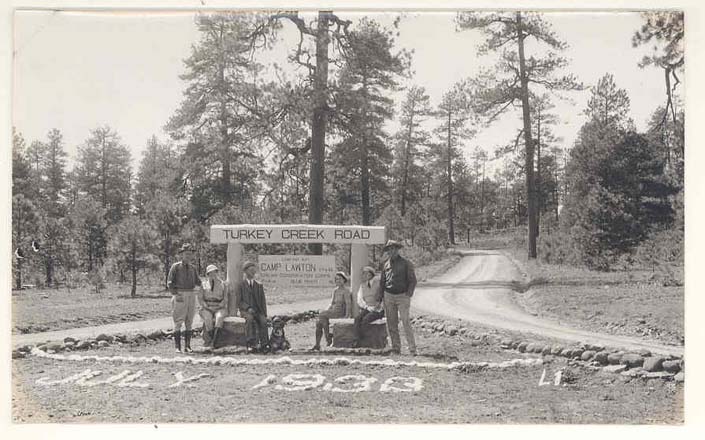
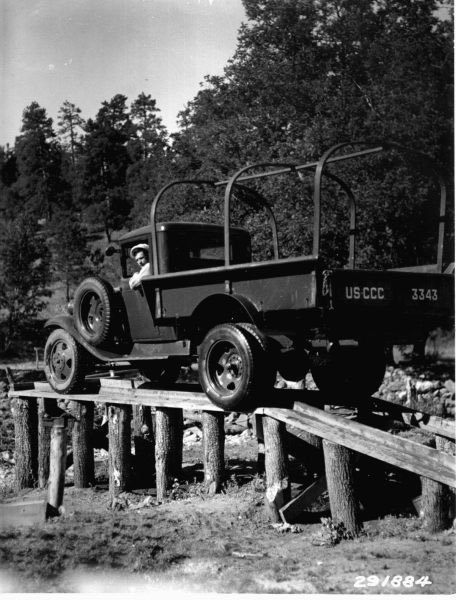
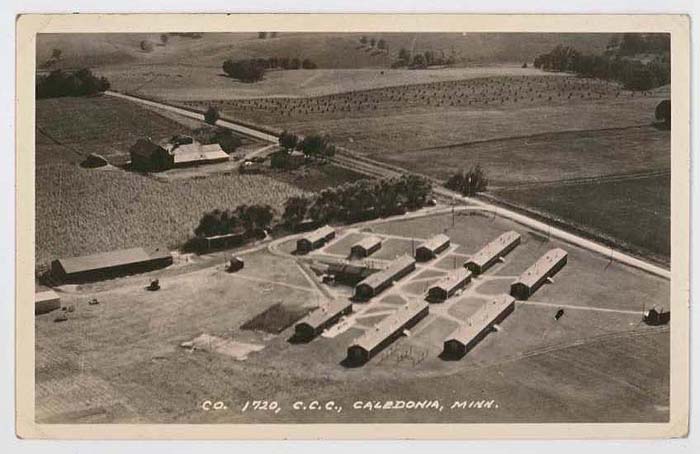
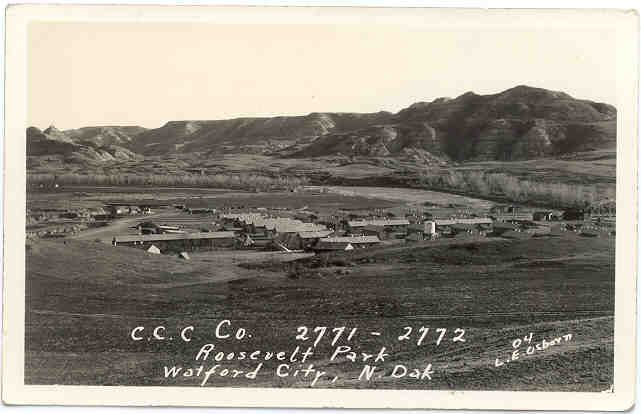
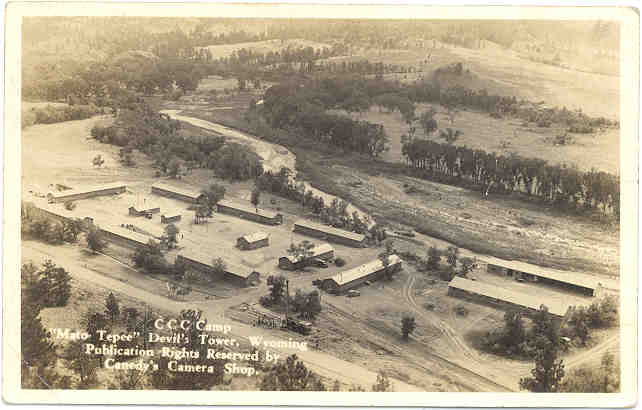
In an effort to create better content here and at the Forest Army blog, I’m creating a new feature that I’ll tentatively title The CCC State By State. Like a lot of “bright ideas” before, this one is not fully formed, but even now I feel that some initial explanation is needed.

The CCC State By State entries will cover the work of the CCC in each of the United States and the U.S. Territories, starting with Alabama and hopefully finishing up with Wyoming. Ideally, I’d have at least one State By State entry done each week during the coming year but likely as not, the entries will spill over into 2012 as well.

In each entry I will include bibliographic data to indicate from where the information has been taken, but in each case the entries will likely develop around data from Perry H. Merrill’s terrific book “Roosevelt’s Forest Army: A History of the Civilian Conservation Corps” first published in 1981 and still available online. Additionally, I’ll try to refer to prominent works related to each individual state, as I know there are a number of books that detail work in specific states and locales. I’ll also try to add links to websites that contain useful information on CCC work in specific states. I anticipate that photos will come from Stan Cohen’s pictorial history of the CCC, The Tree Army and in each case I’ll cite the photo source as well as the original source if that information is listed in my source material (for example a photo from Cohen’s book would also include a citation if it came from a U.S. Forest Service collection, thus my cite would indicate both sources.)

As each individual state entry is completed and posted, I’ll add the name of that state as a label so that visitors here can simply click on the state name to be directed quickly to their state of interest. I’ll also add a bookmark for State By State so that folks can pull up a list of all the blog posts in the series. Finally, I’ll include a link to this first post in the series within each subsequent state post to refer folks back to my original premise and to hopefully keep me on the straight and narrow from an editorial standpoint. As always, I'll rely on input from visitors, too. If I've missed something, please post a comment.

Next post in the series: Alabama.

Source:
Map from Cohen's The Tree Army, A Pictorial History of the CCC, 1933-1942

Monday, December 13, 2010

An Invitation from the Past: Natchaug River Bridge, Connecticut

Thumbing through a three-ring binder from the bookshelf, I came across a neatly folded invitation to a 1934 bridge dedication. In late May 1934, the Honorable Andrew T. J. Clark in Brooklyn, Connecticut was invited to the planned opening of a bridge built across the Natchaug River by the boys of Camp Fernow.

The invitation lists the governor of Connecticut along with the commander of the 3rd Corps area and the director of the US ECW, Robert Fechner as guests of honor. Today I wonder if these esteemed gentlemen did in fact attend the ceremony and I wonder if Mr. Andrew Clark made the journey.

A Google search for images of the bridge yielded nothing. The bridge does receive mention on a Connecticut Department of Environmental Protection website and I’m sad to read that the bridge is no longer deemed safe for vehicle or pedestrian traffic. Perhaps it crumbles away in plain sight of visitors to the Natchaug State Forest. My hope is that the bridge is at least marked with interpretive signage.

Elsewhere on the web you’ll find a personal remembrance of life at Camp Fernow posted at the CCC Legacy website. Former CCC enrollee Bill Beckett writes fondly of his time helping construct the bridge using the simple tools and equipment available at the time – unlike today when cranes and heavy equipment are the norm. He recollects with pride that the bridge is still in use as of his writing in 2009. One has to wonder what has taken place in the last year or so to make forest officials decide to close the bridge. I also wonder if Mr. Beckett was present at the dedication ceremony, standing proudly with his fellow enrollees that day in June 1934. Most certainly there were speeches and, as the invitation states, a tour of the CCC camp. Maybe a lunch was served to guests and visiting dignitaries. It’s important to remember the useful part these dedications and open houses played in the life of the Civilian Conservation Corps. Camps were often filled with young men from out of state and in an era when older residents may have rarely traveled outside their own county, having “outsiders” was a potential disruption that could cause friction if not handled with tact and diplomacy. Thanksgiving and Christmas parties, dances and dedications open to the public were all means of making local residents feel welcome and a useful tool to show folks the value of CCC work in their area. The ceremony to mark the opening of the Natchaug River bridge was no doubt just such an event.

When we think of fall colors, we often think of places like Connecticut and in our mind’s eye there is often a stone bridge mantled in a shroud of red and gold fallen leaves, a crisp cold forest stream coursing below, its waters soon to be frozen as winter nudges closer. That is what I’m thinking of now as I draw the understandable parallel between the lifespan of this stone bridge and the lifespan of the men who built it. They are in the autumn of their years, all of them, and it will fall to those of us who remain to preserve their important work in the form of stone bridges like the one across the Natchaug River on Fernow Road in a scenic corner of Connecticut.

Monday, September 20, 2010

What We've Learned About What They Learned: A Guest Post

I'm pleased, and honored, to be able to post the following piece of new CCC scholarship. My thanks to Bob Audretsch who continues to be a friend to the CCC and it's legacy.

Illiteracy in the CCC

A Guest Post by Robert W. Audretsch


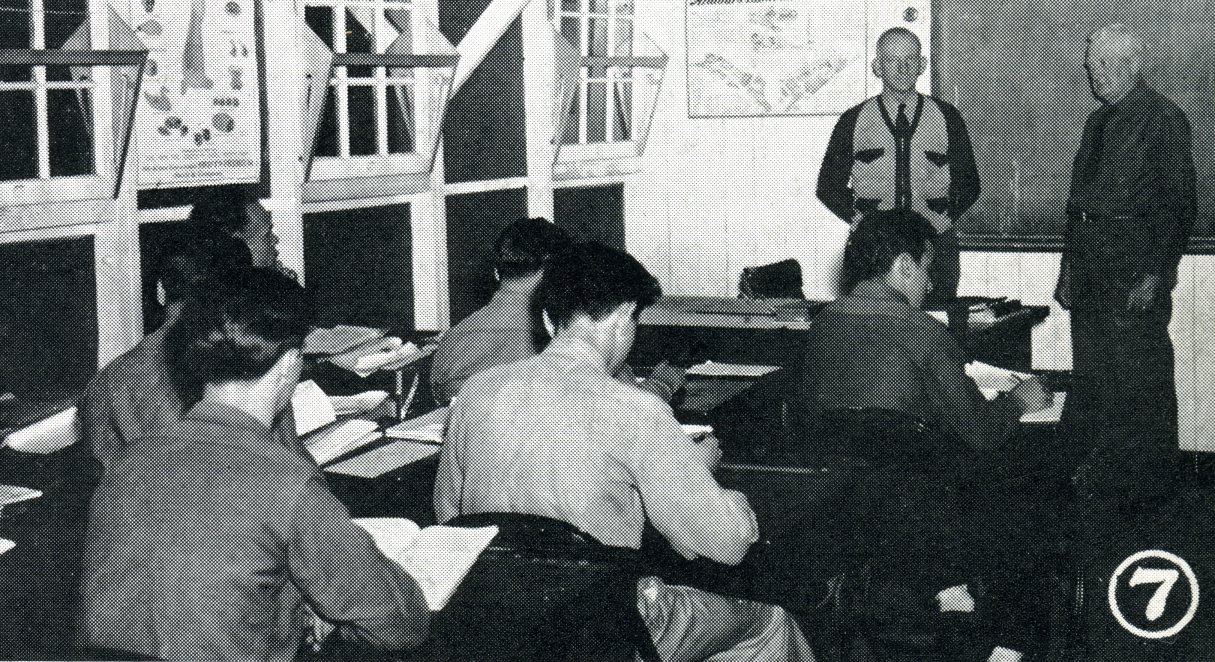
Throughout the over nine year life of the CCC illiteracy was always a national and local concern. In the final report of the CCC published in 1942 Director J. J. McEntee stated that the average enrollee “had completed approximately 8 grades of school but it had taken from 10 to 11 years instead of the customary 8….” However a significant number of enrollees were illiterate. The CCC, always the pragmatic agency, defined literacy as “the ability to write an ordinary letter and read a newspaper with comprehension.”


Perry Merrill’s Roosevelt’s Forest Army; A History of the Civilian Conservation Corps states “…40,000 illiterates learned to read and write.” (page vii) This number seems to have been accepted today but it is my contention that this number is far too low. Happy Days, the unofficial CCC weekly newspaper, stated in its September 5, 1936 issue (page 8) that 40,000 enrollees had attained literacy by mid-year 1936. Not all of the Annual Reports of the CCC Director stated the literacy numbers but the reports of June 30, 1939, 1940 and 1941 listed literacy attained as, respectively: 8,936, 9,000 and 11,697. So one might not be blamed for being skeptical of the 40,000 number listed in the Merrill book. What was the final number of men attaining literacy by the program’s end on June 30, 1942? McEntee’s mimeographed Federal Security Agency Final Report of the Director of the Civilian Conservation Corps (page 112) has a very clear answer: “approximately 110,000 enrollees.”


From the very beginning in 1933 illiterate enrollees were tutored, sometimes in class but sometimes individually, to be able to master basic reading and writing. In one company men who could not sign their name were individually tutored to learn their signature. They could not get paid until they could sign their name! According to the November 27, 1937 issue of Happy Days (page 4) enrollee Carter Lane of Company 5476 (Litchfield, CA) learned to read and write in 14 days! What an astounding fact. But no less wonderful than those over one hundred thousand men who also attained literacy while in the CCC!


The photos in this post were taken from the 1940 Pictorial Review of CCC Company 1130, Camden, Maine, in the First Corps Area.

Sunday, April 18, 2010

More Arizona CCC News!

The acclaimed National Park Service exhibit It Saved My Life, which originated at Grand Canyon National Park in 2008, is finding continued life with the upcoming opening of the exhibit in Tucson, Arizona.

Following a wonderful run in historic Kolb Studio on Grand Canyon’s South Rim, the exhibit was loaned to the City of Phoenix and was set up at Phoenix South Mountain Park. The opening of the exhibit there coincided with the dedication of a CCC Worker Statue at the park.

Now comes word that the exhibit will open for public visitation at the Arizona History museum in Tucson starting Friday, May 14th. There is no immediate word on how long the exhibit will run however the exhibit title has been revised to incorporate the local story of CCC work in Southern Arizona as well. The Arizona Historical Society and the Arizona Humanities Council have teamed up to make the exhibit possible. The announcement for the exhibit opening indicates that on the evening of May 14th visitors will have an opportunity to view the exhibit meet CCC enrollees and enjoy refreshments. On Saturday, May 22nd the museum will host a Family Program during which visitors will be able to go on a family-friendly tour, listen to a fireside chat with FDR and participate in hands-on activities.

It is a tribute to the hard work of folks with the National Park Service that this exhibit continues to enrich people’s lives even after its terrific run at Grand Canyon. It is a further tribute to hard working folks at the local level in Phoenix and Tucson who’ve worked to extend the usefulness of this wonderful exhibit so that it continues to teach people about the work of the CCC in Arizona.

Wednesday, March 24, 2010

Big News for CCC Researchers in Arizona!

In the coming weeks, Chapter 44 of the Civilian Conservation Corps Legacy will donate to the Arizona State Archives a complete set of the available Happy Days newspapers on microfilm!

The film contains issues of Happy Days from 1933 to 1940 and cost just over $500, purchased from the National Archives and Records Administration. The acquisition of this film and its donation to a local repository has huge implications for anyone wanting to do CCC research in Arizona, but as important as it is, the microfilm is only a tool and without a proper finding aid or index, this volume of material is little more than a novelty and a place for researchers to scan randomly with the hope that they will stumble onto information that is useful to their project.

Enter Bob Audretsch, U. S. Park Service retired. Bob has very kindly given his time and talent, devoting hours to scanning the entire six-roll collection to catalog and index every story in the Happy Days film with an Arizona connection. Bob estimates that the work of indexing the Arizona Happy Days stories took six months, working an average of 4 hours a day. Bob’s not new to this, having already indexed CCC stories in two Flagstaff papers and one Williams paper from the 1930s. And, amazingly enough, Bob’s not done; he’s begun work indexing papers from Winslow, Holbrook, Springerville, Camp Verde, Kingman, Prescott and Phoenix. When Bob’s done, much of the heavy lifting will have been accomplished for any researcher hoping to glean CCC stories from Arizona’s major newspapers from the New Deal era.


So, in this project we have the beneficial intertwining of a CCC Legacy chapter with the interest and hard work of a local CCC author and researcher. Chapter 44 has provided the funding for the purchase of the Happy Days on microfilm and Bob Audretsch has provided the sweat of his brow to produce an index that will make the microfilm that much more useful to Arizona researchers.

I’ll provide an update here, once the microfilm is handed over to the Arizona State Archives.

Friday, December 11, 2009

New Deal Days: The CCC at Mesa Verde

New Deal Days: The CCC at Mesa Verde by Ronald C. Brown and Duane A. Smith, published by the Durango Herald Small Press in 2006 as part of the Mesa Verde Centennial Series, is a tidy account of the accomplishments of the CCC at Mesa Verde in southwestern Colorado.

Although the book is somewhat short, the author’s have wisely chosen to keep their discussion and analysis of the creation and general history of the CCC relatively brief, thus giving over more space for the terrific story of the CCC history at Mesa Verde National Park. After all, most folks who consider picking up a book of this sort will likely have come to understand the situation in the United States in 1933 when the first CCC enrollees arrived at Prater Canyon to occupy a camp that can only accurately be characterized as “rustic.”

Brown and Smith provide wonderful snippets of camp life, drawing on personal accounts from enrollees who were at Mesa Verde as well as official records and camp newspaper accounts of activities. From the rigors of working on a bug crew to swapping out the carburetor jets on the trucks, even seemingly mundane tasks associated with life in the CCC camps are worthy of mention in the text. And, while CCC work was “labor intensive and characteristically unglamorous,” it seems the enrollees could always make time for taking potshots at a bobcat with a “bean shooter” or for dumping a local jail building in the river!

Also noteworthy are the more than 35 photos that illustrate the text as well as the walking tour of CCC projects that is included near the end of the book. (The walking tour was written by Don Ross.) Also, for those with a particular interest in camp architecture, there is a terrific section entitled “Architecture, Design and Construction of CCC Camps at Mesa Verde” written by Susana M. Jones also included in the text.

You can see (and purchase) the New Deal Days at the publisher’s website Here.

Be sure to visit the Mesa Verde Museum Association website.


At roughly 130 pages in length a book of this size leaves you wondering what else there might be to uncover. (For example, what were the exact details regarding the jail and its dip into the river?) Nevertheless, this book is still another required addition for anyone hoping to compile a library of meaningful CCC books and with a cover price that is altogether reasonable, there really isn’t any excuse to pass this one up.

Monday, November 23, 2009

A Mystery From the Bookshelf: Who Was Wendell Young?

Understand from the outset that we may never know exactly who Wendell Young was, or is and in that fact there may be a lesson.

In the course of researching and reading about the Civilian Conservation Corps, I’ve managed to acquire a file cabinet or two full of histories and recollections about the New Deal era and especially the CCC. Some of the most intriguing stories are the ones that have a lot of loose ends to them.

Consider an old copy of the Dupont Blasters Handbook, Ninth Edition from 1938. The copy I have is nearly pristine and still in the box that it was shipped in from the advertising department at Dupont in Wilmington, Delaware. Carefully inked inside the front cover is the following:
Wendell J. Young
CCC Co# 1608
CCC-47257 Camp Tomahawk


The book doesn’t contain another mark of any kind. One wonders if young Wendell used the book for a class or if he simply put it in his footlocker and forgot about it.

The bookseller was evidently selling off lots of items related to Mr. Young’s life and in another group was a collection of photos, presumably of Wendell and family or friends. What I find especially interesting is the significant difference between the photo of Wendell at a family gathering (above) compared to the image of the rough and ready outdoorsman in another photo presumably taken at camp (below).


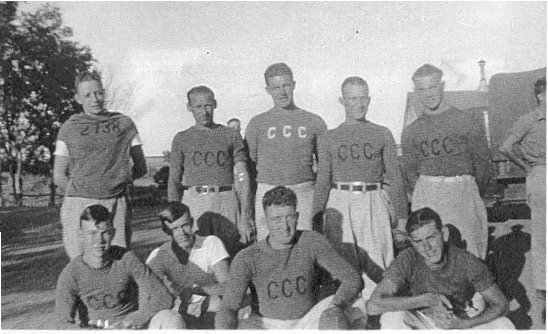
According to a newspaper clipping that was with the other items, the group eventually ended up in Washington State and it seems this might be where the second photo was taken, but unless someone steps forward with more information, it’s really anyone’s guess.

For now Wendell Young will remain just another of the 3 million or so young men who enrolled in the CCC and perhaps quickly forgot about the experience as they helped win a war, raise a family and toil in relative obscurity, all the while making ours the greatest nation on the face of the earth.

It’s easy enough to say that we’ll never, ever know all there is to know about the 3 million or so young men who enrolled in the CCC between 1933 and 1942 but somehow it’s difficult to reconcile ourselves to the fact that we may never know much about Wendell Young, except that he was once in the CCC, he once owned a Dupont Blaster’s Handbook and someone loved him very much.

You can see a US Government image from Camp Tomahawk HERE.