Monday, January 24, 2011

The C.C.C. State-By-State: Arkansas

In Roosevelt’s Forest Army, Perry Merrill devotes a good deal of space to a detailed accounting of CCC work in Arkansas (nearly 2 and a half pages, whereas Arizona garners barely a half page). We’ll find as we progress through all the states and territories that some places simply have better documentation of their CCC work and perhaps this is what Mr. Merrill encountered when he created his entry for Arkansas.

Let’s start with some simple statistics from Roosevelt’s Forest Army. An astounding 62, 882 individuals from all states worked in the CCC in Arkansas between 1933 and 1942. In that time, the CCC built 4,956 bridges of varying types, strung 6,956 miles of telephone line, built 82,190 check dams and made forest stand improvements to some 496,000 acres of land.

The 1937 Annual Report of the Director of Emergency Conservation Work includes a state-by-state monthly breakdown of the numbers of enrollees from each state. Enrollment in Arkansas for fiscal year 1937 stacked up like this:

July 1936: 8,539
August 1936: 8,144
September 1936: 6,226
October 1936: 11,049
November 1936: 10,681
December 1936: 10,307
January 1937: 10,291
February 1937: 9,976
March 1937: 7,471
April 1937: 10,329
May 1937: 9,931
June 1937: 9,295

(Keep in mind that these figures represent the number of enrollees who enrolled in Arkansas, not the number of enrollees actually working in Arkansas on a month-to-month basis. The title of the table cited is "Total enrolled strength of the Civilian Conservation Corps by States in which enrolled...")

Merrill notes that the average number of CCC camps in Arkansas was 37 and at one time 64 camps, employing 13,000 men were in operation in the state. (The map illustration is a detail from Stan Cohen’s book The Tree Army. The map from which this was taken was a 1938 illustration of CCC camps nationwide. I’ve isolated Arkansas and highlighted the camps with colored blocks to make it easier to read. Remember that this map doesn’t show every camp that operated in the state of Arkansas between 1933 and 1942; better to look at this as a snapshot of camp locations in 1938.)

Among the noteworthy accomplishments specifically cited by Merrill: The construction of 80 forest lookouts statewide, a three thousand seat amphitheatre in Crowley’s Ridge State Park, soil conservation work statewide, including the planting of sod, construction of check dams and planting of trees. At the White River Migratory Waterfowl Refuge, CCC enrollees planted grasses to provide food for the birds.

There is a nice history of the CCC in Arkansas entitled (appropriately) "The Civilian Conservation Corps in Arkansas, 1933-1942 available on line. Written by Sandra Taylor Smith, this piece, though brief, is surprising in its detail and even includes a nice bibliography. You’ll note that Perry Merrill’s book is listed in the bibliography, but strangely, there is no reference to John Salmond’s landmark study from the 1960s.

Smith notes that Arkansas was in the Seventh Corps Area with the Corps headquarters located in Omaha, Nebraska. Smith also points out that enrollees were sent to what was then Camp Pike in North Little Rock before being given their permanent camp assignment. Smith’s article is a useful piece of CCC research and an asset to anyone wishing to gain an insight into the work of the CCC in Arkansas.

One sad aspect of the CCC program that we’ll encounter as we progress through this state-by-state history is the incidence of racism in the selection, enrollment and deployment of minority groups, especially blacks and seemingly especially in the southern states. One could argue that the CCC’s only true failing was in the area of racial integration and equality. Though the legislation that created the Civilian Conservation Corps included language prohibiting discrimination based on race, problems cropped up almost immediately during the initial selection process in the individual states. For an excellent account of these initial problems and indeed a valuable discussion of the problem of racism in the CCC, see John Salmond’s groundbreaking work from the 1960s, The Civilian Conservation Corps, 1933-1942: A New Deal Case Study. Of particular interest with respect to racial policy in the CCC is Salmond’s discussion in Chapter 5, “The Selection of Negroes, 1933-1937” (A copy of Salmond’s important work is now available online and can be viewed here.)

As for the issue of racism in Arkansas’s selection process, Salmond wrote:
Similarly (compared to Georgia), after investigating an NAACP complaint of discrimination in Arkansas, Persons (Frank W. Persons, director of CCC selection nationwide) again threatened to withhold quotas. The state’s indignant relief director, William A. Rooksbery, unequivocally denied the charge that no Negroes had been selected. No less than three had in fact been enrolled, he protested, but Persons was unimpressed, and told him so. The chastened state official promised to induct more within the following few weeks.

In a region of the country where blacks made up as much as 50 percent of the total population, the lack of recruitment of blacks for work in southern CCC camps is disgusting today, but must be viewed in light of the overriding system of prejudice at the time. Further, cases of racism were not confined to the southern states by any means and as we progress through the state-by-state histories we’ll see that camps were segregated by race nationwide and that all-black camps ran into local opposition in such seemingly progressive regions as California.
Salmond goes on to point out that, beyond the initial difficulty of actually getting young blacks selected and enrolled into the CCC, Arkansas citizens “accepted with equanimity many Negro camps.” But in the end, CCC Director Robert Fechner never forced the issue and, if local protests erupted due to the all-black nature of a CCC camp, he would order the camp closed or moved onto an Army reservation, for, as Salmond writes in Fechner’s own words, he was “a Southerner by birth and raising” and thus he, “clearly understood the Negro problem.”

For the Forest Service perspective on CCC work in Arkansas, be sure to visit their online history The Forest Service and the Civilian Conservation Corps.

The Encyclopedia of Arkansas History & Culture also has terrific information about the work of the CCC in Arkansas, including some pictures!

Larry Sypolt’s invaluable book Civilian Conservation Corps: A Selectively Annotated Bibliography lists a couple of resources directly related to the CCC in Arkansas under the section of the book devoted to the 7th Corps Area. If you can’t find these articles or books on line, you might try your local librarian (For example, the Sandra Taylor Smith article referenced above, is listed in Sypolt and is available on line. Other sources may not be so easy to find, but will likely prove worth the effort if your project relates directly to the work of the CCC in Arkansas.) Among the Arkansas-related sources listed in Sypolt:
“Two Decades of State Forestry in Arkansas,” by Fred H. Long, published in Arkansas Historical Quarterly 24:3 (1965).
“A Brief History of Camp Sage: CCC Camp P-76, Stella, Arkansas,” by Burney B. McClurkan, Arkansas State Highway and Transportation Department, 1994.
“The Civilian Conservation Corps in Arkansas: 1933-1934,” self-published by Charles A. O’Dell in Little Rock, Arkansas in 1995.

We’ll close this entry in the State-By-State series with a brief personal testimonial from an enrollee in Arkansas. In 1934 the American Forestry Association published a nifty little book entitled Youth Rebuilds: Stories from the C.C.C. The book is a series of stories or testimonials from CCC enrollees across the United States and it offers an interesting glimpse of the program when it was still in its earliest, formative years. Included in the book is a piece written by Robert R. Ross, an enrollee in Company 741 at Crystal Springs, Arkansas. (The first CCC camp to be established in Arkansas according to the Sandra Taylor Smith article previously noted.) Young Robert wrote, in part:

Every day in the woods I come across something that can be applied to the text of some book I have read. Thus, by observation and study, I am fitting myself for my chosen work. I now understand fully that phrase – “fresh start in a healthful occupation in the open.” The work and sunshine have been beneficial to my health beyond all measure. I have gained in weight and strength. I have felt better than at any time in the last few years. Maybe it is that full feeling I experience three times each day!

If you’d like to get some background on the purpose and scope of this series, you can read the initial entry in the State-By-State series by clicking here.

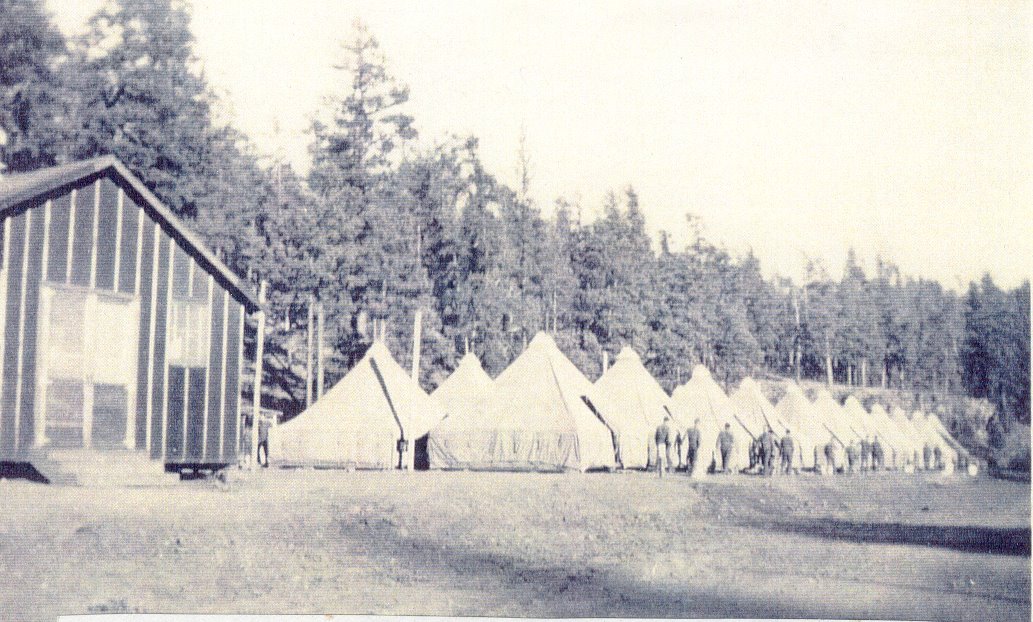
The photo is a detail from a larger image of Camp Nodak near Plainview Arkansas. The photo is dated November 1933. The 1934 Christmas menu from the Crowley’s Ridge camp lists the enrollees and Local Experienced Men at the camp and is from my document files.

Tuesday, January 18, 2011

The C.C.C. State-By-State: Arizona

This marks the third state entry in the State-By-State series. If you’d like to get some background on the purpose and scope of this series, you can read the initial entry in the State-By-State series by clicking here. Over time, there may be a need to go back and revise the individual state entries in order to add new information or correct the information that is already posted, so if you’re interested in a particular state, be sure to check back from time to time to see if there are any updates.

Arizona is another state for which there has been some worthwhile and very useful CCC research done in the not too distant past, most notably Robert Moore’s book on the CCC in Arizona’s Rim Country, which we’ll touch on in a moment.

First, let’s start with some statistics from Perry Merrill’s book Roosevelt’s Forest Army. Merrill notes that the number of individual camps in the state of Arizona numbered about fifty and that the aggregate number of Arizona men who were given work as a result of the CCC stands at 41,363. Between 1933 and 1942, CCC enrollees in Arizona strung 3,559 miles of telephone lines, built 512,093 erosion control check dams and planted an astounding 7.4 million trees! Merrill also briefly notes the work of the CCC in Phoenix, Tucson, Colossal Cave and the Hualpai Mountains though an error in the text makes it seem that the Hualapai Mountains are in or near Tucson, when in fact they are in the opposite corner of the state, near Kingman, Arizona. (You’ll also note the various spellings of “Hualapai”.)

For many years and importantly during the Great Depression, Arizona had a wonderful advocate in the person of Senator Carl Hayden. To read about the creation of the CCC camps at Phoenix South Mountain Park – including Senator Hayden’s role in the effort – click on my previous post about the CCC at South Mountain Park. It is safe to say that were it not for Senator Hayden, Phoenix would not have gotten at least two of the CCC camps that it was allotted during the 1930s. One can only imagine what other help Senator Hayden provided to insure the success of the CCC in Arizona.

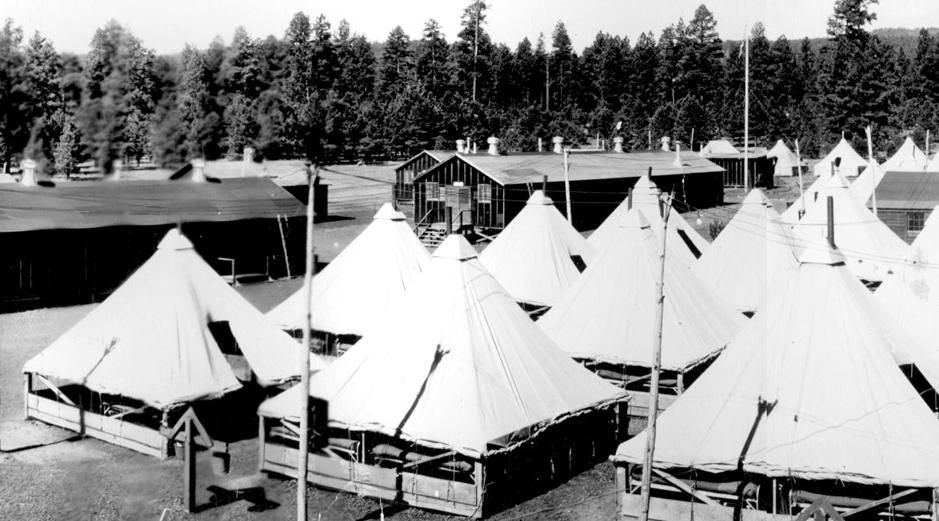
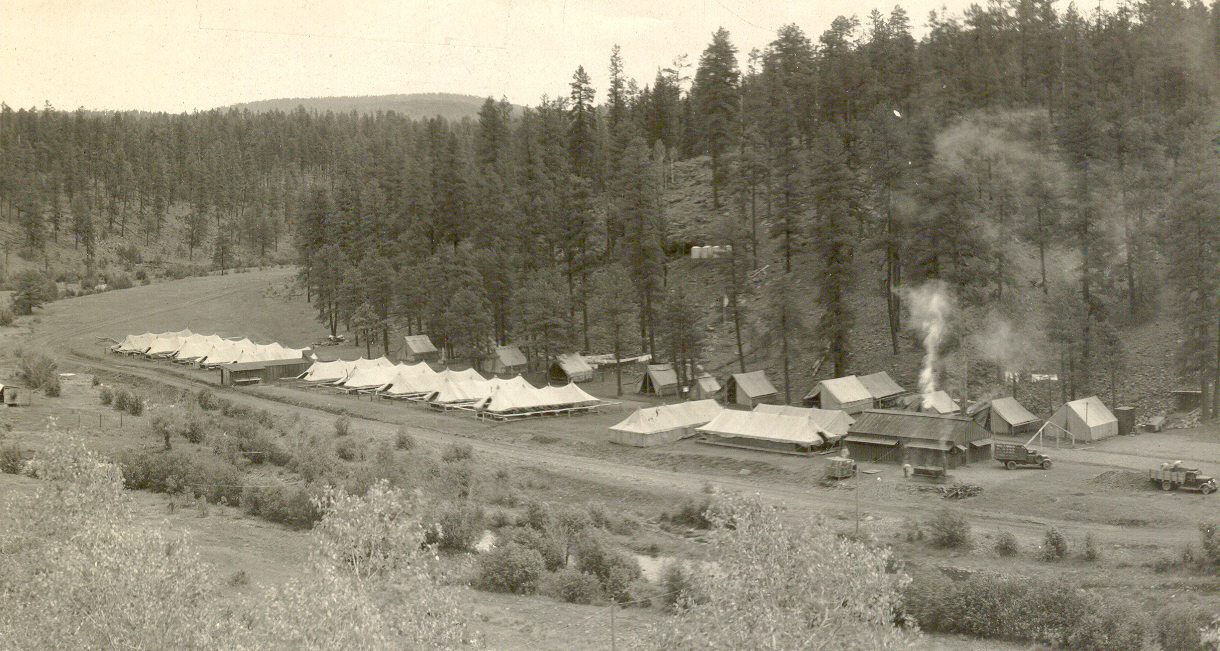
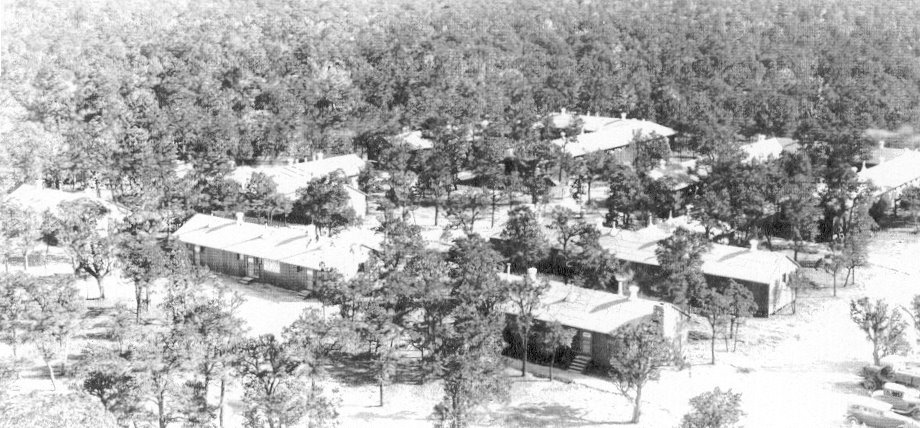
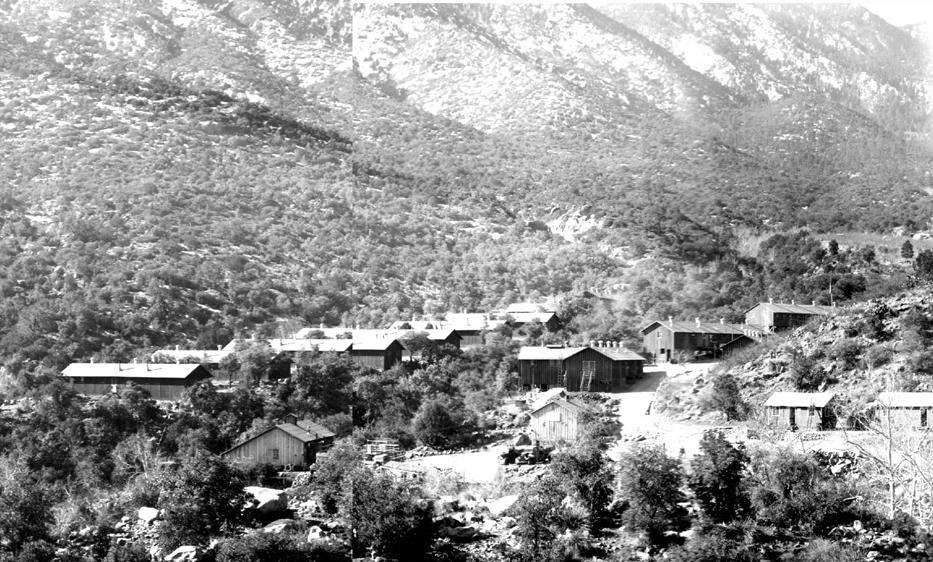
The CCC also worked at Papago Park, another park located in the Phoenix metropolitan area. Lesser known though vaguely referenced in Roosevelt’s Forest Army, is the work at Hualapai Mountain Park near Kingman, Arizona. You can see an all too brief history of the park by clicking on the Mojave County Parks website here. The 1936 Phoenix District Annual reported that at that time Company 1837 was working at camp SP-8-A in the “Hualpai” Mountains. Prior to arriving near Kingman, Company 1837 worked at SP-1-A in Randolph Park near Tucson and then camp SP-6-A in Tucson’s Rincon Mountains. (The black and white photos of SP-8-A in this post are from that 1936 District Annual.) Given the fact that the place owes its existence to the CCC, more could be done to document and report on the work of the CCC at Hualapai Mountain Park.

A thumbnail sketch of the places where the CCC worked in Arizona would look something like this:
Multiple improvements like roads, ramadas and lookout structures at both Phoenix South Mountain Park and Papago Park, infrastructure and aesthetic improvements at Grand Canyon, both on the North and South Rims and down in the Canyon. Additionally, upgrades and improvements to the irrigation system in the metro Phoenix area and in the area around Yuma, erosion control work throughout the state, significant improvements at Colossal Cave and Chiricahua National Monument in southeastern Arizona, immeasurable improvements to the forest lands across the state and work at Petrified Forest.

Two books come to mind when discussing the work of the CCC in Arizona: Louis Lester Purvis’ wonderful book The Ace in the Hole: A Brief History of Company 818 of the Civilian Conservation Corps (1989) and Robert J. Moore’s more recent, more scholarly book The Civilian Conservation Corps in Arizona’s Rim Country: Working in the Woods (2006). Purvis’ book on the work of the CCC at Grand Canyon stands head and shoulders above other Arizona-related works because it is the only published text that is a personal narrative penned by a CCC veteran who worked in Arizona and I’ve been remiss in not posting a detailed review of it here or at the Forest Army blog. To read an earlier posting I did for Moore’s book, over at Forest Army click here. Bottom line: If you’re doing research on the work of the CCC in Arizona, these two books will be an important resource for you.

Other equally important if less in-depth coverage of CCC work in Arizona can be found in Sharon Hunt’s Images of America book entitled Vail and Colossal Cave Mountain Park and Donna and George Hartz’s Images of America book entitled The Phoenix Area’s Parks and Preserves, both published by Arcadia Publishing. (Any time to encounter an Arcadia Publishing Images of America title, be sure to scan through it for images and references to the CCC – you’ll be surprised at how often these titles include references to work done by the Forest Army during the 1930s.) Elsewhere, you’ll find references to the CCC in Letters from Wupatki by Courtney Reeder Jones and Bradford Luckingham’s Phoenix: A History of a Southwestern Metropolis. (Admittedly, the single reference to the CCC in Luckingham is a bit thin but the book also provides useful insight into life in Phoenix during the New Deal era.)

To view all of the Arizona-related posts over at the Forest Army blog, click here.

Interest in the work of the CCC in Arizona remains strong and the Arizona State Archives now maintains a set of all available issues of the CCC newspaper Happy Days on microfilm.

The map for this post (as with all maps used thus far) comes from a map of camp locations published in Cohen’s The Tree Army. The color photo of the CCC-built cabin comes from the Mojave County Parks website and the black and white images of the CCC camp at Hualpai Mountain Park are from the 1936 Phoenix District Annual.

Sunday, January 9, 2011

The C.C.C. State-By-State: Alaska

The existing CCC documentation for the Alaska Territory seems nearly as remote as that largest of the 50 United States. Alaska had not yet entered the Union as a full-fledged state but was home to important CCC work nevertheless.

For some reason Alaska does not merit its own state-by-state summary in the back of Perry Merrill’s book Roosevelt’s Forest Army. However there is a two-paragraph reference to the Territory of Alaska in the early sections of the book. Merrill notes that Alaska did not have CCC camps per se, but instead enrollees remained in their own homes in their own communities and the work was largely seasonal, building truck trails, improving campground infrastructure and cruising timber. Merrill reports that in 1935 there were just 325 enrollees working in the territory and that all were middle-aged men.

A far more detailed account of the work of the CCC in Alaska can be found in the U.S. Forest Service’s online history The Forest Service and the Civilian Conservation Corps. The official history points out that in the Alaskan Territory, the CCC did not operate under the Army’s corps system but rather under the direct jurisdiction of the regional Forest Service office. The official history also contradicts Merrill’s reference to the non-camp set up of the CCC in Alaska, stating that the enrollees were stationed in “small, decentralized camps” in the existing national forests.

An especially interesting aspect of the CCC in Alaska is the involvement of the territory’s native peoples, including its Eskimo population, who were brought into the program in 1937 but dropped from participation just two years later over fears that the program was causing “too much dependence on the white man’s way.” One somewhat unusual project involving native peoples was the herding and butchering of reindeer and the harvesting of their brains for export.

The organizational structure of the CCC in Alaska was somewhat similar to the way in which the Indian Emergency Conservation Work program was organized in the Lower 48. Men were generally older in the Alaskan CCC program, they lived closer to home and sometimes in their own homes (compare this description to that given in Merrill’s brief summary) and they were allowed to keep more of their monthly pay than the typical CCC enrollee.

The Forest Service history also notes that the CCC contributed to national defense work in Alaska through their work helping build Annette Army Airfield as well as other major airfields. To see a brief history of Annette Island and its airfield, click here.

You’ll see a nice history of the CCC’s work at the Tongass National Forest website.

You might also be interested the book Alaska at War 1941-1945: The Forgotten War Remembered, edited by Fern Chandonnet. Alaska at War includes a chapter on the work of the CCC in Alaska.


Regarding the images: All the pictures in this post were taken from Cohen's Tree Army. The surveyor with the plane table is working in Knudson Cove and the image is a USFS image. The other image shows CCC enrollees working on Annette Island and is cited by Cohen as a National Archives image.

Monday, January 3, 2011

The C.C.C. State-By-State: Alabama


To read the initial entry in the State-By-State series, click here.

The first entry in the State-By-State series is relatively easy, given that Robert Pasquill, Jr. did a state-specific study in 2008. Pasquill’s The Civilian Conservation Corps in Alabama, 1933-1942: A Great and Lasting Good is an asset for its appendices alone. Add in the fact that the book includes a disk of interviews with CCC enrollees and you’ve got an irresistible package for CCC buffs or anyone seeking information on Alabama CCC projects.

According to statistics cited by Merrill in Roosevelt’s Forest Army, the CCC in Alabama strung more than 1,800 miles of telephone lines, built over 3,000 miles of roads and truck trails, planted just over 60,000 trees and built 659 bridges of various types. Merrill reports that in 1937 the aggregate number of Alabama men employed by the CCC was 66,837 and that an estimated $16.4 million in allotments was made to dependents by enrollees.

Not surprisingly, Pasquill cites Merrill’s work in his summary of CCC accomplishments in Alabama. Pasquill also quotes at length from an article that ran in the July 16, 1942 edition of the Moulton Advertiser, just a couple weeks after the CCC was officially disbanded. I won’t run the entire entry here, but will pass along this small bit from the article, entitled “A Great and Lasting Good Accomplished by the CCC”:

[During the lifetime of the CCC] “CCC camps under the jurisdiction of the U.S. Forest Service and State Forester advanced the cause of forest conservation in Alabama by at least a generation both in the national forests and on state and privately owned land.”

As we’ll see with every state, Alabama’s CCC camps were like small towns and many camps had camp newspapers that sported names like Bull Thrower, Camp Jester, Mess Kit and See See See. Pasquill’s book includes a helpful list of camp newspapers in the appendices.

Pasquill’s list of Alabama CCC camps breaks them out under technical services: U.S. Forest Service, Soil Conservation Service, Tennessee Valley Authority, State Parks, Private Forest Projects and State Forest Projects. Additionally, while Alabama hosted a number of colored CCC companies and even some CCC companies comprised of black World War I veterans, Pasquill’s text isn’t particularly user-friendly for researchers looking for specific references to all-black CCC camps or CCC companies; there are no index listings to direct the reader to topics related to “race,” or “racism” or ‘African-American enrollees,” for example. On the other hand, a diligent reader or researcher will be able to cross-reference the camp listing against the individual camp histories to get an idea of where the all-black CCC companies worked in Alabama.

One could argue that the CCC’s only true failing was in the area of racial integration and equality; indeed the incidence of racism in the selection, enrollment and deployment of minority groups, especially blacks and seemingly especially in the southern states, is the one sad aspect of the CCC program that we’ll encounter consistently as we progress through this state-by-state history. Though the legislation that created the Civilian Conservation Corps included language prohibiting discrimination based on race, problems cropped up almost immediately during the initial selection process in the individual states. For an excellent account of these initial problems and indeed a valuable discussion of the problem of racism in the CCC, see John Salmond’s groundbreaking work from the 1960s, The Civilian Conservation Corps, 1933-1942: A New Deal Case Study. Of particular interest with respect to racial policy in the CCC is Salmond’s discussion in Chapter 5, “The Selection of Negroes, 1933-1937” (A copy of Salmond’s important work is now available online and can be viewed here.)

So, despite this very minor shortcoming, let there be no doubt that if you’re looking for information on the CCC in Alabama, Robert Pasquill’s book is where you need to start and it may indeed contain everything you need, but in the event you’re still looking, here are some links to other sites with information on the CCC in Alabama:

Click here for a history of CCC work in Dekalb County, Alabama.

For a look at the U.S. Forest Service history of CCC work in Region 8, which included Alabama, click here.

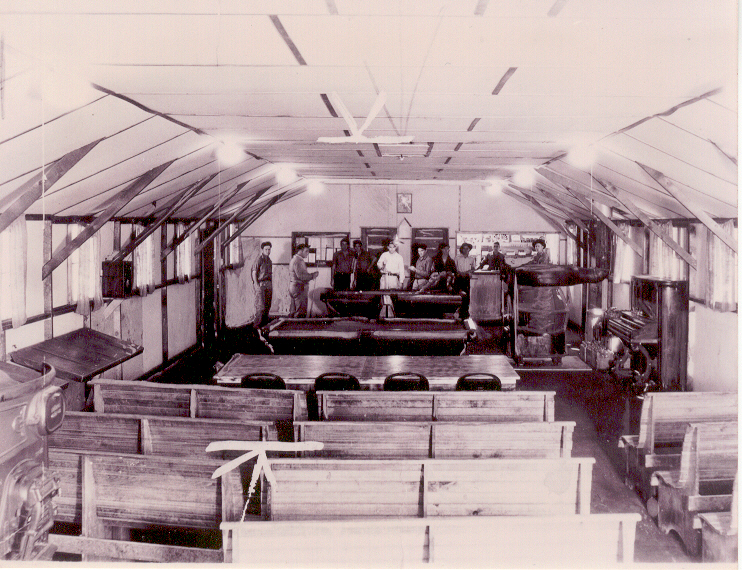
Image Credits: State Map is an edited detail from Cohen's The Tree Army. The photo is also from Cohen and is a view of the recreation room of Camp P-60, home to Veteran's Company 2420, Chatom, Alabama.

Next stop on the State-By-State tour: (The Territory of) Alaska.

Monday, December 27, 2010

Introduction: The CCC State By State

In an effort to create better content here and at the Forest Army blog, I’m creating a new feature that I’ll tentatively title The CCC State By State. Like a lot of “bright ideas” before, this one is not fully formed, but even now I feel that some initial explanation is needed.

The CCC State By State entries will cover the work of the CCC in each of the United States and the U.S. Territories, starting with Alabama and hopefully finishing up with Wyoming. Ideally, I’d have at least one State By State entry done each week during the coming year but likely as not, the entries will spill over into 2012 as well.

In each entry I will include bibliographic data to indicate from where the information has been taken, but in each case the entries will likely develop around data from Perry H. Merrill’s terrific book “Roosevelt’s Forest Army: A History of the Civilian Conservation Corps” first published in 1981 and still available online. Additionally, I’ll try to refer to prominent works related to each individual state, as I know there are a number of books that detail work in specific states and locales. I’ll also try to add links to websites that contain useful information on CCC work in specific states. I anticipate that photos will come from Stan Cohen’s pictorial history of the CCC, The Tree Army and in each case I’ll cite the photo source as well as the original source if that information is listed in my source material (for example a photo from Cohen’s book would also include a citation if it came from a U.S. Forest Service collection, thus my cite would indicate both sources.)

As each individual state entry is completed and posted, I’ll add the name of that state as a label so that visitors here can simply click on the state name to be directed quickly to their state of interest. I’ll also add a bookmark for State By State so that folks can pull up a list of all the blog posts in the series. Finally, I’ll include a link to this first post in the series within each subsequent state post to refer folks back to my original premise and to hopefully keep me on the straight and narrow from an editorial standpoint. As always, I'll rely on input from visitors, too. If I've missed something, please post a comment.

Next post in the series: Alabama.

Source:
Map from Cohen's The Tree Army, A Pictorial History of the CCC, 1933-1942

Monday, December 13, 2010

An Invitation from the Past: Natchaug River Bridge, Connecticut

Thumbing through a three-ring binder from the bookshelf, I came across a neatly folded invitation to a 1934 bridge dedication. In late May 1934, the Honorable Andrew T. J. Clark in Brooklyn, Connecticut was invited to the planned opening of a bridge built across the Natchaug River by the boys of Camp Fernow.

The invitation lists the governor of Connecticut along with the commander of the 3rd Corps area and the director of the US ECW, Robert Fechner as guests of honor. Today I wonder if these esteemed gentlemen did in fact attend the ceremony and I wonder if Mr. Andrew Clark made the journey.

A Google search for images of the bridge yielded nothing. The bridge does receive mention on a Connecticut Department of Environmental Protection website and I’m sad to read that the bridge is no longer deemed safe for vehicle or pedestrian traffic. Perhaps it crumbles away in plain sight of visitors to the Natchaug State Forest. My hope is that the bridge is at least marked with interpretive signage.

Elsewhere on the web you’ll find a personal remembrance of life at Camp Fernow posted at the CCC Legacy website. Former CCC enrollee Bill Beckett writes fondly of his time helping construct the bridge using the simple tools and equipment available at the time – unlike today when cranes and heavy equipment are the norm. He recollects with pride that the bridge is still in use as of his writing in 2009. One has to wonder what has taken place in the last year or so to make forest officials decide to close the bridge. I also wonder if Mr. Beckett was present at the dedication ceremony, standing proudly with his fellow enrollees that day in June 1934. Most certainly there were speeches and, as the invitation states, a tour of the CCC camp. Maybe a lunch was served to guests and visiting dignitaries. It’s important to remember the useful part these dedications and open houses played in the life of the Civilian Conservation Corps. Camps were often filled with young men from out of state and in an era when older residents may have rarely traveled outside their own county, having “outsiders” was a potential disruption that could cause friction if not handled with tact and diplomacy. Thanksgiving and Christmas parties, dances and dedications open to the public were all means of making local residents feel welcome and a useful tool to show folks the value of CCC work in their area. The ceremony to mark the opening of the Natchaug River bridge was no doubt just such an event.

When we think of fall colors, we often think of places like Connecticut and in our mind’s eye there is often a stone bridge mantled in a shroud of red and gold fallen leaves, a crisp cold forest stream coursing below, its waters soon to be frozen as winter nudges closer. That is what I’m thinking of now as I draw the understandable parallel between the lifespan of this stone bridge and the lifespan of the men who built it. They are in the autumn of their years, all of them, and it will fall to those of us who remain to preserve their important work in the form of stone bridges like the one across the Natchaug River on Fernow Road in a scenic corner of Connecticut.

Monday, September 20, 2010

What We've Learned About What They Learned: A Guest Post

I'm pleased, and honored, to be able to post the following piece of new CCC scholarship. My thanks to Bob Audretsch who continues to be a friend to the CCC and it's legacy.

Illiteracy in the CCC

A Guest Post by Robert W. Audretsch


Throughout the over nine year life of the CCC illiteracy was always a national and local concern. In the final report of the CCC published in 1942 Director J. J. McEntee stated that the average enrollee “had completed approximately 8 grades of school but it had taken from 10 to 11 years instead of the customary 8….” However a significant number of enrollees were illiterate. The CCC, always the pragmatic agency, defined literacy as “the ability to write an ordinary letter and read a newspaper with comprehension.”


Perry Merrill’s Roosevelt’s Forest Army; A History of the Civilian Conservation Corps states “…40,000 illiterates learned to read and write.” (page vii) This number seems to have been accepted today but it is my contention that this number is far too low. Happy Days, the unofficial CCC weekly newspaper, stated in its September 5, 1936 issue (page 8) that 40,000 enrollees had attained literacy by mid-year 1936. Not all of the Annual Reports of the CCC Director stated the literacy numbers but the reports of June 30, 1939, 1940 and 1941 listed literacy attained as, respectively: 8,936, 9,000 and 11,697. So one might not be blamed for being skeptical of the 40,000 number listed in the Merrill book. What was the final number of men attaining literacy by the program’s end on June 30, 1942? McEntee’s mimeographed Federal Security Agency Final Report of the Director of the Civilian Conservation Corps (page 112) has a very clear answer: “approximately 110,000 enrollees.”


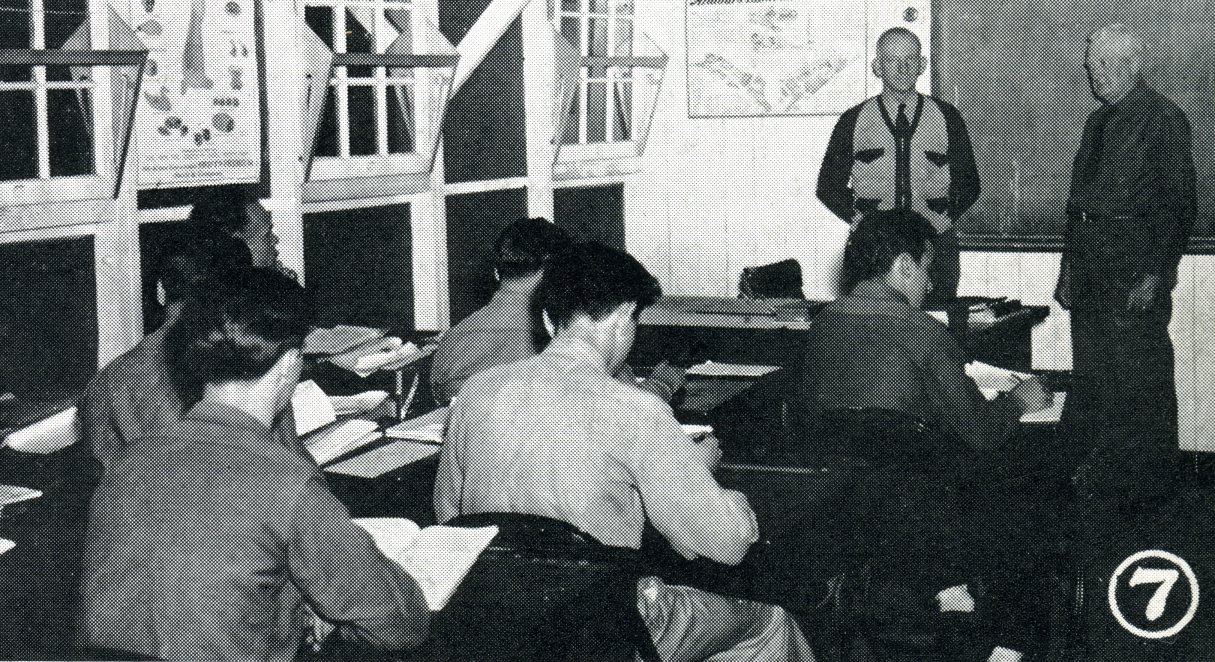
From the very beginning in 1933 illiterate enrollees were tutored, sometimes in class but sometimes individually, to be able to master basic reading and writing. In one company men who could not sign their name were individually tutored to learn their signature. They could not get paid until they could sign their name! According to the November 27, 1937 issue of Happy Days (page 4) enrollee Carter Lane of Company 5476 (Litchfield, CA) learned to read and write in 14 days! What an astounding fact. But no less wonderful than those over one hundred thousand men who also attained literacy while in the CCC!


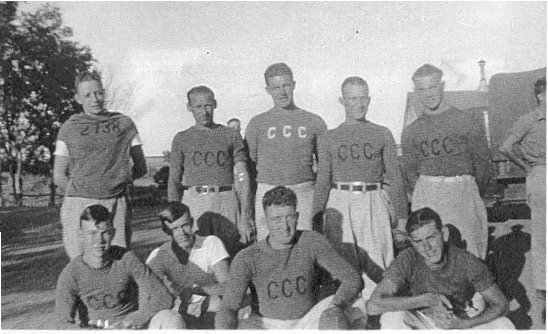
The photos in this post were taken from the 1940 Pictorial Review of CCC Company 1130, Camden, Maine, in the First Corps Area.